


Page 8 - Read Online
P. 8
Page 4 of 14       Alvarez-Tirado et al. Energy Mater 2023;3:300003  https://dx.doi.org/10.20517/energymater.2022.59


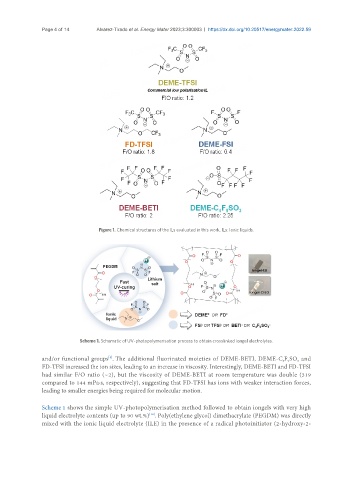
                                  Figure 1. Chemical structures of the ILs evaluated in this work. ILs: Ionic liquids.


                            Scheme 1. Schematic of UV-photopolymerisation process to obtain crosslinked iongel electrolytes.


               and/or functional groups . The additional fluorinated moieties of DEME-BETI, DEME-C F SO  and
                                      [8]
                                                                                                     3
                                                                                                3 9
               FD-TFSI increased the ion sizes, leading to an increase in viscosity. Interestingly, DEME-BETI and FD-TFSI
               had similar F/O ratio (~2), but the viscosity of DEME-BETI at room temperature was double (319
               compared to 144 mPa·s, respectively), suggesting that FD-TFSI has ions with weaker interaction forces,
               leading to smaller energies being required for molecular motion.

               Scheme 1 shows the simple UV-photopolymerisation method followed to obtain iongels with very high
                                                   [16]
               liquid electrolyte contents (up to 90 wt.%) . Poly(ethylene glycol) dimethacrylate (PEGDM) was directly
               mixed with the ionic liquid electrolyte (ILE) in the presence of a radical photoinitiator (2-hydroxy-2-

