


Page 40 - Read Online
P. 40
Page 22 of 31             Miao et al. Energy Mater 2023;3:300014  https://dx.doi.org/10.20517/energymater.2022.89


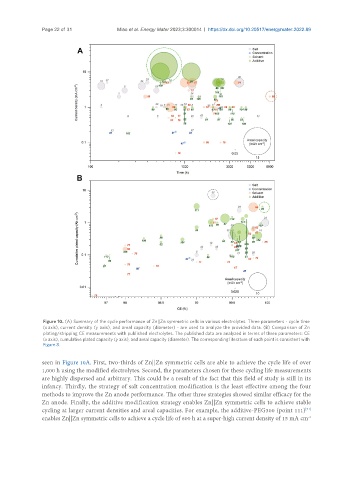
                Figure 10. (A) Summary of the cycle performance of Zn||Zn symmetric cells in various electrolytes. Three parameters - cycle time
                (x axis), current density (y axis), and areal capacity (diameter) - are used to analyze the provided data. (B) Comparison of Zn
                plating/stripping CE measurements with published electrolytes. The published data are analyzed in terms of three parameters: CE
                (x axis), cumulative plated capacity (y axis), and areal capacity (diameter). The corresponding literature of each point is consistent with
                Figure 8.

               seen in Figure 10A. First, two-thirds of Zn||Zn symmetric cells are able to achieve the cycle life of over
               1,000 h using the modified electrolytes. Second, the parameters chosen for these cycling life measurements
               are highly dispersed and arbitrary. This could be a result of the fact that this field of study is still in its
               infancy. Thirdly, the strategy of salt concentration modification is the least effective among the four
               methods to improve the Zn anode performance. The other three strategies showed similar efficacy for the
               Zn anode. Finally, the additive modification strategy enables Zn||Zn symmetric cells to achieve stable
                                                                                                        [71]
               cycling at larger current densities and areal capacities. For example, the additive-PEG300 (point 111)
                                                                                                         -2
               enables Zn||Zn symmetric cells to achieve a cycle life of 600 h at a super-high current density of 15 mA cm

