


Page 127 - Read Online
P. 127
Page 4 of 14               Shi et al. Energy Mater 2023;3:300036  https://dx.doi.org/10.20517/energymater.2023.27


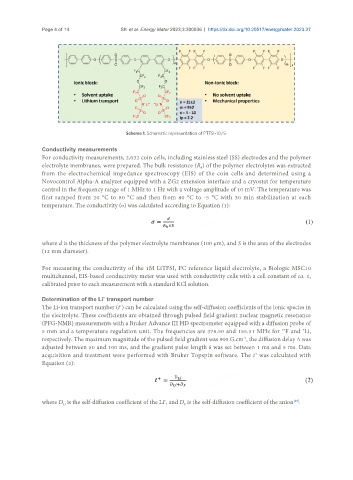
                                           Scheme 1. Schematic representation of PTFSI-10/5.

               Conductivity measurements
               For conductivity measurements, 2,032 coin cells, including stainless steel (SS) electrodes and the polymer
               electrolyte membranes, were prepared. The bulk resistance (R ) of the polymer electrolytes was extracted
                                                                     b
               from the electrochemical impedance spectroscopy (EIS) of the coin cells and determined using a
               Novocontrol Alpha-A analyzer equipped with a ZG2 extension interface and a cryostat for temperature
               control in the frequency range of 1 MHz to 1 Hz with a voltage amplitude of 10 mV. The temperature was
               first ramped from 20 °C to 80 °C and then from 80 °C to -5 °C with 30 min stabilization at each
               temperature. The conductivity (σ) was calculated according to Equation (1):


               where d is the thickness of the polymer electrolyte membranes (100 µm), and S is the area of the electrodes
               (12 mm diameter).


               For measuring the conductivity of the 1M LiTFSI, PC reference liquid electrolyte, a Biologic MSC10
               multichannel, EIS-based conductivity meter was used with conductivity cells with a cell constant of ca. 1,
               calibrated prior to each measurement with a standard KCl solution.

                                    +
               Determination of the Li  transport number
                                         +
               The Li-ion transport number (t ) can be calculated using the self-diffusion coefficients of the ionic species in
               the electrolyte. These coefficients are obtained through pulsed field gradient nuclear magnetic resonance
               (PFG-NMR) measurements with a Bruker Advance III HD spectrometer equipped with a diffusion probe of
                                                                                                       7
               5 mm and a temperature regulation unit. The frequencies are 376.50 and 155.51 MHz for  F and  Li,
                                                                                                19
               respectively. The maximum magnitude of the pulsed field gradient was 900 G.cm , the diffusion delay Δ was
                                                                                   -1
               adjusted between 50 and 100 ms, and the gradient pulse length δ was set between 1 ms and 5 ms. Data
               acquisition and treatment were performed with Bruker Topspin software. The t  was calculated with
                                                                                       +
               Equation (2):


               where D  is the self-diffusion coefficient of the Li , and D  is the self-diffusion coefficient of the anion .
                                                                                                    [28]
                                                        +
                      Li
                                                               F

