


Page 62 - Read Online
P. 62
Page 14 of 19                    Wang et al. Carbon Footprints 2024;3:14  https://dx.doi.org/10.20517/cf.2024.19


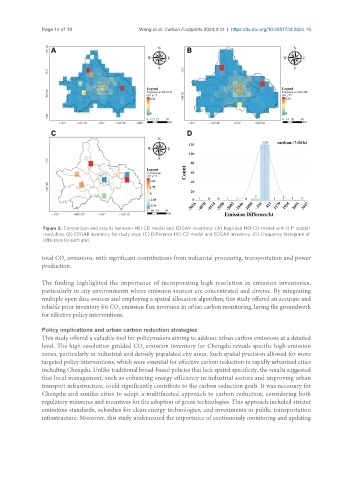
                Figure 8. Comparison and results between HEI-CD model and EDGAR inventory: (A) Regirded HEI-CD model with 0.1° spatial
                resolution; (B) EDGAR inventory for study area; (C) Difference HEI-CD model and EDGAR inventory; (D) Frequency histogram of
                difference for each grid.


               total CO  emissions, with significant contributions from industrial processing, transportation and power
                       2
               production.

               The finding highlighted the importance of incorporating high resolution in emission inventories,
               particularly in city environments where emission sources are concentrated and diverse. By integrating
               multiple open data sources and employing a spatial allocation algorithm, this study offered an accurate and
               reliable prior inventory for CO  emission flux inversion in urban carbon monitoring, laying the groundwork
                                         2
               for effective policy interventions.

               Policy implications and urban carbon reduction strategies
               This study offered a valuable tool for policymakers aiming to address urban carbon emissions at a detailed
               level. The high-resolution gridded CO  emission inventory for Chengdu reveals specific high-emission
                                                 2
               zones, particularly in industrial and densely populated city areas. Such spatial precision allowed for more
               targeted policy interventions, which were essential for effective carbon reduction in rapidly urbanized cities
               including Chengdu. Unlike traditional broad-based policies that lack spatial specificity, the results suggested
               that local management, such as enhancing energy efficiency in industrial sectors and improving urban
               transport infrastructure, could significantly contribute to the carbon reduction goals. It was necessary for
               Chengdu and similar cities to adopt a multifaceted approach to carbon reduction, considering both
               regulatory measures and incentives for the adoption of green technologies. This approach included stricter
               emissions standards, subsidies for clean energy technologies, and investments in public transportation
               infrastructure. Moreover, this study underscored the importance of continuously monitoring and updating

