


Page 61 - Read Online
P. 61
Page 6 of 19                                                   Lin et al. Cancer Drug Resist. 2026;9:14


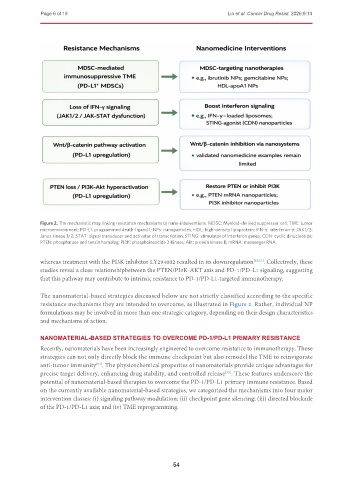
               Figure 2. The mechanistic map linking resistance mechanisms to nano-interventions. MDSC: Myeloid-derived suppressor cell; TME: tumor
               microenvironment; PD-L1: programmed death-ligand 1; NPs: nanoparticles; HDL: high-density lipoprotein; IFN-γ: interferon-γ; JAK1/2:
               Janus kinase 1/2; STAT: signal transducer and activator of transcription; STING: stimulator of interferon genes; CDN: cyclic dinucleotide;
               PTEN: phosphatase and tensin homolog; PI3K: phosphoinositide 3-kinase; Akt: protein kinase B; mRNA: messenger RNA.


               whereas treatment with the PI3K inhibitor LY294002 resulted in its downregulation [52,53] . Collectively, these
               studies reveal a close relationshipbetween the PTEN/PI3K-AKT axis and PD-1/PD-L1 signaling, suggesting
               that this pathway may contribute to intrinsic resistance to PD-1/PD-L1-targeted immunotherapy.

               The nanomaterial-based strategies discussed below are not strictly classified according to the specific
               resistance mechanisms they are intended to overcome, as illustrated in Figure 2. Rather, individual NP
               formulations may be involved in more than one strategic category, depending on their design characteristics
               and mechanisms of action.


               NANOMATERIAL-BASED STRATEGIES TO OVERCOME PD-1/PD-L1 PRIMARY RESISTANCE
               Recently, nanomaterials have been increasingly engineered to overcome resistance to immunotherapy. Those
               strategies can not only directly block the immune checkpoint but also remodel the TME to reinvigorate
               anti-tumor immunity . The physicochemical properties of nanomaterials provide unique advantages for
                                 [54]
               precise target delivery, enhancing drug stability, and controlled release . These features underscore the
                                                                             [55]
               potential of nanomaterial-based therapies to overcome the PD-1/PD-L1 primary immune resistance. Based
               on the currently available nanomaterial-based strategies, we categorized the mechanisms into four major
               intervention classes: (i) signaling pathway modulation; (ii) checkpoint gene silencing; (iii) directed blockade
               of the PD-1/PD-L1 axis; and (iv) TME reprogramming.


                                                           54

