


Page 46 - Read Online
P. 46
Singh et al. Cancer Drug Resist. 2025;8:56                                       Page 11 of 20


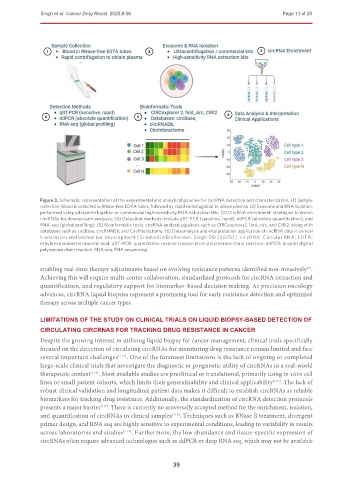
               Figure 3. Schematic representation of the experimental and analytical pipeline for circRNA detection and characterization. (1) Sample
               collection: blood is collected in RNase-free EDTA tubes, followed by rapid centrifugation to obtain plasma; (2) Exosome and RNA isolation:
               performed using ultracentrifugation or commercial high-sensitivity RNA extraction kits; (3) CircRNA enrichment: strategies to enrich
               circRNAs for downstream analyses; (4) Detection methods: include qRT-PCR (sensitive, rapid), ddPCR (absolute quantification), and
               RNA-seq (global profiling); (5) Bioinformatic tools: circRNA analysis pipelines such as CIRCexplorer2, find_circ, and CIRI2, along with
               databases such as circBase, circRNADb, and CircInteractome; (6) Data analysis and interpretation: application of circRNA data in clinical
               translation and biomarker development [Created in BioRender. Singh DD (2025)]. circRNA: Circular RNA; EDTA:
               ethylenediaminetetraacetic acid; qRT-PCR: quantitative reverse transcription polymerase chain reaction; ddPCR: droplet digital
               polymerase chain reaction; RNA-seq: RNA sequencing.


               enabling real-time therapy adjustments based on evolving resistance patterns identified non-invasively .
                                                                                                         [6]
               Achieving this will require multi-center collaboration, standardized protocols for circRNA extraction and
               quantification, and regulatory support for biomarker-based decision making. As precision oncology
               advances, circRNA liquid biopsies represent a promising tool for early resistance detection and optimized
               therapy across multiple cancer types.

               LIMITATIONS OF THE STUDY ON CLINICAL TRIALS ON LIQUID BIOPSY-BASED DETECTION OF

               CIRCULATING CIRCRNAS FOR TRACKING DRUG RESISTANCE IN CANCER
               Despite the growing interest in utilizing liquid biopsy for cancer management, clinical trials specifically
               focused on the detection of circulating circRNAs for monitoring drug resistance remain limited and face
               several important challenges [114] . One of the foremost limitations is the lack of ongoing or completed
               large-scale clinical trials that investigate the diagnostic or prognostic utility of circRNAs in a real-world
               therapeutic context [115] . Most available studies are preclinical or translational, primarily using in vitro cell
               lines or small patient cohorts, which limits their generalizability and clinical applicability [116] . The lack of
               robust clinical validation and longitudinal patient data makes it difficult to establish circRNAs as reliable
               biomarkers for tracking drug resistance. Additionally, the standardization of circRNA detection protocols
               presents a major barrier . There is currently no universally accepted method for the enrichment, isolation,
                                   [117]
               and quantification of circRNAs in clinical samples [118] . Techniques such as RNase R treatment, divergent
               primer design, and RNA seq are highly sensitive to experimental conditions, leading to variability in results
               across laboratories and studies [119] . Furthermore, the low abundance and tissue-specific expression of
               circRNAs often require advanced technologies such as ddPCR or deep RNA seq, which may not be available


                                                           39

