


Page 47 - Read Online
P. 47
Page 12 of 20                                                                                                 Singh et al. Cancer Drug Resist. 2025;8:56


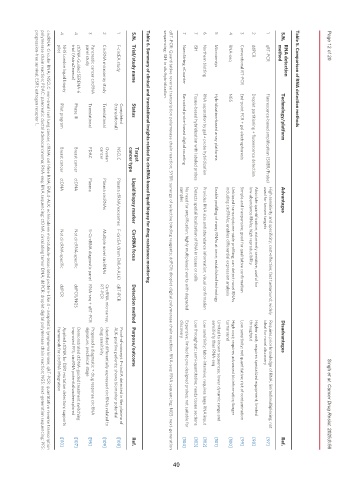
               Table 5. Comparison of RNA detection methods
                   RNA detection
               S.N.                 Technology/platform            Advantages                                   Disadvantages                           Ref.
                   method
                                                                   High sensitivity and specificity; cost-effective; fast turnaround; widely  Requires prior knowledge of RNA; limited multiplexing; not
               1   qRT-PCR          Fluorescence-based amplification (SYBR/Probe)                                                                       [97]
                                                                   used for known targets                       ideal for novel discovery
                                                                   Absolute quantification; extremely sensitive; useful for  Higher cost; requires specialized equipment; limited
               2   ddPCR            Droplet partitioning + fluorescence detection                                                                       [98]
                                                                   low-abundance RNAs; high reproducibility     throughput
               3   Conventional RT-PCR  End-point PCR + gel electrophoresis  Simple and inexpensive; good for qualitative confirmation  Low sensitivity; not quantitative; risk of contamination  [99]
                                                                   Unbiased transcriptome-wide profiling; can detect novel RNAs  High cost; requires advanced bioinformatics; longer
               4   RNA-seq          NGS                                                                                                                 [100]
                                                                   including circRNAs; enables differential expression analysis  turnaround
                                                                                                                Limited to known sequences; lower dynamic range and
               5   Microarrays      Hybridization-based array platforms  Enable profiling of many RNAs at once; established technology                  [101]
                                                                                                                sensitivity than RNA-seq
               6   Northern blotting  RNA separation by gel + probe hybridization  Provides RNA size and abundance information; visual confirmation  Low sensitivity; labor-intensive; requires large RNA input  [102]
               7   ISH              Tissue-based hybridization with labeled probes  Detects spatial localization of RNA in tissue or cells  Low throughput; semi-quantitative; needs tissue sections  [103]
                                                                   No need for amplification; highly multiplexed; works with degraded  Expensive; limited to pre-designed probes; not suitable for
               7   NanoString nCounter  Barcoded probe-based digital counting                                                                           [104]
                                                                   samples                                      discovery
                                                                                                                                                                  40
               qRT-PCR: Quantitative reverse transcription polymerase chain reaction; SYBR: synergy of selective binding reagents; ddPCR: droplet digital polymerase chain reaction; RNA-seq: RNA sequencing; NGS: next-generation
               sequencing; ISH: in situ hybridization.

               Table 6. Summary of clinical and translational insights related to circRNA-based liquid biopsy for drug resistance monitoring

                                                      Target
               S.N. Trial/study name   Status                   Liquid biopsy marker  CircRNA focus  Detection method Purpose/outcome                   Ref.
                                                      cancer type
                                       Completed                                                                   Proof-of-concept: F-circEA detected in the plasma of
               1   F-circEA study                     NSCLC     Plasma cfRNA/exosomes F-circEA (from EML4-ALK) qRT-PCR                                  [108]
                                       (translational)                                                             ALK-positive patients; shows biomarker potential
                                                      Ovarian                                       CircRNA microarray,  Identified differentially expressed circRNAs related to
               2   CircRNA microarray study  Translational      Plasma circRNAs   Multiple novel circRNAs                                               [109]
                                                      cancer                                        RT-PCR         drug sensitivity
                   Pancreatic cancer circRNA                                                                       Proposed a diagnostic + drug response circRNA
               3                       Translational  PDAC      Plasma            5-CircRNA diagnostic panel RNA-seq + qRT-PCR                          [95]
                   panel study                                                                                     signature; preclinical stage
                   ctDNA-Guided SERENA-6                                                                           Demonstrated ctDNA-guided treatment switching
               4                       Phase III      Breast cancer  ctDNA        Not circRNA-specific  ddPCR/NGS                                       [107]
                   trial (AstraZeneca)                                                                             improved PFS; circRNA potential underexplored
                   NHS London liquid biopsy                                                                        Applied ctDNA for ESR1 mutation detection; supports
               4                       Pilot program  Breast cancer  ctDNA        Not circRNA-specific  ddPCR                                           [110]
                   pilot                                                                                           framework for circRNA integration
               circRNA: Circular RNA; NSCLC: non-small cell lung cancer; cfRNA: cell-free RNA; EML4-ALK: echinoderm microtubule-associated protein-Like 4 – anaplastic lymphoma kinase; qRT-PCR: quantitative reverse transcription
               polymerase chain reaction; PDAC: pancreatic ductal adenocarcinoma; RNA-seq: RNA sequencing; ctDNA: circulating tumor DNA; ddPCR: droplet digital polymerase chain reaction; NGS: next-generation sequencing; PFS:
               progression-free survival; ESR1: estrogen receptor 1.

