


Page 40 - Read Online
P. 40
Singh et al. Cancer Drug Resist. 2025;8:56                                        Page 5 of 20


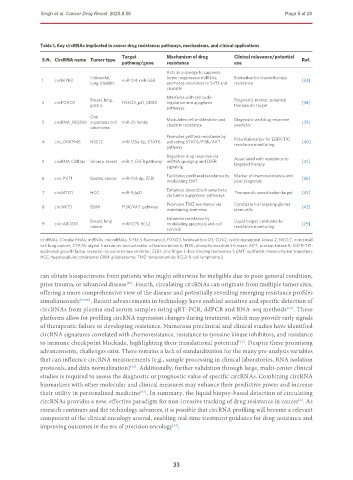
               Table 1. Key circRNAs implicated in cancer drug resistance: pathways, mechanisms, and clinical applications
                                          Target         Mechanism of drug      Clinical relevance/potential
               S.N. CircRNA name Tumor type                                                            Ref.
                                          pathway/gene   resistance             use
                                                         Acts as a sponge to suppress
                               Colorectal,               tumor-suppressor miRNAs;  Biomarker for chemotherapy
               1   circHIPK3              miR-124, miR-558                                             [33]
                               lung, bladder             promotes resistance to 5-FU and  resistance
                                                         cisplatin
                                                         Interferes with cell cycle
                               Breast, lung,                                    Prognostic marker; potential
               2   circFOXO3              FOXO3, p21, CDK2  regulation and apoptosis                   [38]
                               gastric                                          therapeutic target
                                                         pathways
                               Oral
               3   circRNA_100290 squamous cell  miR-29 family  Modulates cell proliferation and  Diagnostic and drug response  [39]
                               carcinoma                 cisplatin resistance   predictor
                                                         Promotes gefitinib resistance by
               4   circ_0001946  NSCLC    miR-135a-5p, STAT6  activating STAT6/PI3K/AKT  Potential marker for EGFR-TKI  [40]
                                                         pathway                resistance monitoring
                                                         Regulates drug response via
               5   circRNA CDR1as  Glioma, breast  miR-7, EGFR pathway  miRNA sponging and EGFR  Associated with resistance to  [41]
                                                         signaling              targeted therapy
                                                         Facilitates paclitaxel resistance by  Marker of chemoresistance and
               6   circ-PVT1   Gastric cancer  miR-124-3p, ZEB1                                        [36]
                                                         modulating EMT         poor prognosis
                                                         Enhances doxorubicin sensitivity
               7   circMTO1    HCC        miR-9/p21                             Therapeutic sensitization target  [42]
                                                         via tumor suppressor pathways
                                                         Promotes TMZ resistance via  Candidate for targeting glioma
               8   circAKT3    GBM        PI3K/AKT pathway                                             [43]
                                                         maintaining stemness   stem cells
                                                         Enhances resistance by
                               Breast, lung                                     Liquid biopsy candidate for
               9   circ-ABCB10            miR-1271, BCL2  modulating apoptosis and cell                [29]
                               cancer                                           resistance monitoring
                                                         survival
               circRNAs: Circular RNAs; miRNAs: microRNAs; 5-FU: 5-fluorouracil; FOXO3: forkhead box O3; CDK2: cyclin-dependent kinase 2; NSCLC: non-small
               cell lung cancer; STAT6: signal transducer and activator of transcription 6; PI3K: phosphoinositide 3-kinase; AKT: protein kinase B; EGFR-TKI:
               epidermal growth factor receptor-tyrosine kinase inhibitor; ZEB1: zinc finger E-box-binding homeobox 1; EMT: epithelial-mesenchymal transition;
               HCC: hepatocellular carcinoma; GBM: glioblastoma; TMZ: temozolomide; BCL2: B-cell lymphoma 2.

               can obtain biospecimens from patients who might otherwise be ineligible due to poor general condition,
               prior trauma, or advanced disease . Fourth, circulating circRNAs can originate from multiple tumor sites,
                                            [59]
               offering a more comprehensive view of the disease and potentially revealing emerging resistance profiles
               simultaneously [59,60] . Recent advancements in technology have enabled sensitive and specific detection of
               circRNAs from plasma and serum samples using qRT-PCR, ddPCR and RNA-seq methods . These
                                                                                                  [60]
               platforms allow for profiling circRNA expression changes during treatment, which may provide early signals
               of therapeutic failure or developing resistance. Numerous preclinical and clinical studies have identified
               circRNA signatures correlated with chemoresistance, resistance to tyrosine kinase inhibitors, and resistance
               to immune checkpoint blockade, highlighting their translational potential . Despite these promising
                                                                                 [61]
               advancements, challenges exist. There remains a lack of standardization for the many pre-analysis variables
               that can influence circRNA measurements (e.g., sample processing in clinical laboratories, RNA isolation
               protocols, and data normalization) . Additionally, further validation through large, multi-center clinical
                                             [62]
               studies is required to assess the diagnostic or prognostic value of specific circRNAs. Combining circRNA
               biomarkers with other molecular and clinical measures may enhance their predictive power and increase
               their utility in personalized medicine . In summary, the liquid biopsy-based detection of circulating
                                                [63]
               circRNAs provides a new, effective paradigm for non-invasive tracking of drug resistance in cancer . As
                                                                                                      [6]
               research continues and the technology advances, it is possible that circRNA profiling will become a relevant
               component of the clinical oncology arsenal, enabling real-time treatment guidance for drug resistance and
               improving outcomes in the era of precision oncology .
                                                           [44]


                                                           33

