


Page 39 - Read Online
P. 39
Page 4 of 20                                                 Singh et al. Cancer Drug Resist. 2025;8:56


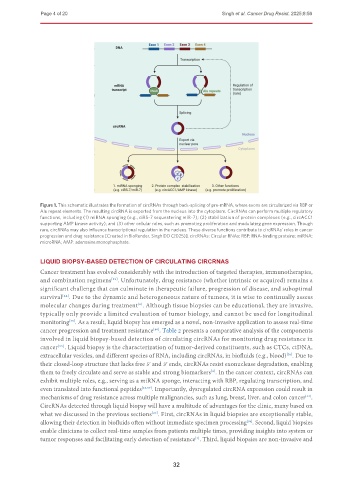
               Figure 1. This schematic illustrates the formation of circRNAs through back-splicing of pre-mRNA, where exons are circularized via RBP or
               Alu repeat elements. The resulting circRNA is exported from the nucleus into the cytoplasm. CircRNAs can perform multiple regulatory
               functions, including (1) miRNA sponging (e.g., ciRS-7 sequestering miR-7); (2) stabilization of protein complexes (e.g., circACC1
               supporting AMP kinase activity); and (3) other cellular roles, such as promoting proliferation and modulating gene expression. Though
               rare, circRNAs may also influence transcriptional regulation in the nucleus. These diverse functions contribute to circRNAs’ roles in cancer
               progression and drug resistance [Created in BioRender. Singh DD (2025)]. circRNAs: Circular RNAs; RBP: RNA-binding proteins; miRNA:
               microRNA; AMP: adenosine monophosphate.


               LIQUID BIOPSY-BASED DETECTION OF CIRCULATING CIRCRNAS
               Cancer treatment has evolved considerably with the introduction of targeted therapies, immunotherapies,
               and combination regimens . Unfortunately, drug resistance (whether intrinsic or acquired) remains a
                                       [29]
               significant challenge that can culminate in therapeutic failure, progression of disease, and suboptimal
               survival . Due to the dynamic and heterogeneous nature of tumors, it is wise to continually assess
                      [44]
               molecular changes during treatment . Although tissue biopsies can be educational, they are invasive,
                                                [6]
               typically only provide a limited evaluation of tumor biology, and cannot be used for longitudinal
               monitoring . As a result, liquid biopsy has emerged as a novel, non-invasive application to assess real-time
                        [45]
               cancer progression and treatment resistance . Table 2 presents a comparative analysis of the components
                                                     [46]
               involved in liquid biopsy-based detection of circulating circRNAs for monitoring drug resistance in
               cancer . Liquid biopsy is the characterization of tumor-derived constituents, such as CTCs, ctDNA,
                     [55]
               extracellular vesicles, and different species of RNA, including circRNAs, in biofluids (e.g., blood) . Due to
                                                                                                  [56]
               their closed-loop structure that lacks free 5′ and 3′ ends, circRNAs resist exonuclease degradation, enabling
               them to freely circulate and serve as stable and strong biomarkers . In the cancer context, circRNAs can
                                                                        [6]
               exhibit multiple roles, e.g., serving as a miRNA sponge, interacting with RBP, regulating transcription, and
               even translated into functional peptides [16,57] . Importantly, dysregulated circRNA expression could result in
               mechanisms of drug resistance across multiple malignancies, such as lung, breast, liver, and colon cancer .
                                                                                                        [44]
               CircRNAs detected through liquid biopsy will have a multitude of advantages for the clinic, many based on
               what we discussed in the previous sections . First, circRNAs in liquid biopsies are exceptionally stable,
                                                    [24]
               allowing their detection in biofluids often without immediate specimen processing . Second, liquid biopsies
                                                                                    [58]
               enable clinicians to collect real-time samples from patients multiple times, providing insights into system or
               tumor responses and facilitating early detection of resistance . Third, liquid biopsies are non-invasive and
                                                                   [2]


                                                           32

