


Page 22 - Read Online
P. 22
Page 6 of 10                             Fan et al. Soft Sci 2024;4:43  https://dx.doi.org/10.20517/ss.2024.63

               Table 1. MA performance of MOF-based MAMs

                Dimension  Morphology                 EAB (GHz)    RL (dB)       Filling ratio (wt.%)  Refs.
                                       MAMs
                    0D     Core-shell    Ni@C@ZnO     4.1          -55.8 (2.5 mm)       25          40
                           hollow      Co/C           6.8          -52.66 (2.7 mm)      30          45
                  1D       Nanotubes   Co/MnO/CNTs    4.5 (1.32 mm)  -58.0         35               46
                  2D       Nanosheets  N-GN           -            -54 (2.1 mm)    3                47
                  3D       Flower      NCNT/NiCo/C    4.64         -66.1 (1.5 mm)       15          37
                           aerogel     CoNiFe-PBA/GO  6.6          -66.23 (2.6 mm)      1.1         33

               MA: Microwave absorption; MOF: Metal-organic framework; MAMs: Microwave absorbing materials; EAB: Effective absorption bandwidth; RL:
               Reflection loss; CNT: Carbon nanotube; N-GN: N-doped porous graphene carbon nanonets; NCNT: N-doped CNT; PBA: Prussian blue analog; GO:
               Graphene oxide; 0D: Zero-dimensional; 1D: One-dimensional; 2D: Two-dimensional; 3D: Three-dimensional.


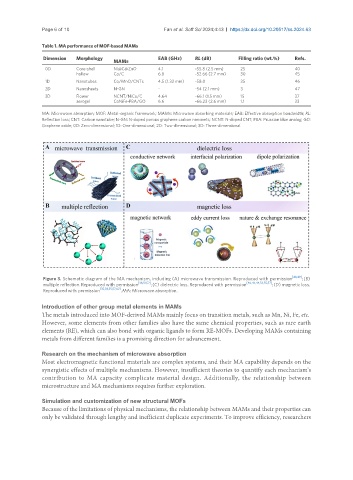
                Figure 3. Schematic diagram of the MA mechanism, including (A) microwave transmission. Reproduced with  permission [48,49] ; (B)
                multiple reflection. Reproduced with permission [38,51,52] ; (C) dielectric loss. Reproduced with permission [40,43,44,53,55,57] ; (D) magnetic loss.
                Reproduced with permission [35,39,55,57,62] . MA: Microwave absorption.

               Introduction of other group metal elements in MAMs
               The metals introduced into MOF-derived MAMs mainly focus on transition metals, such as Mn, Ni, Fe, etc.
               However, some elements from other families also have the same chemical properties, such as rare earth
               elements (RE), which can also bond with organic ligands to form RE-MOFs. Developing MAMs containing
               metals from different families is a promising direction for advancement.


               Research on the mechanism of microwave absorption
               Most electromagnetic functional materials are complex systems, and their MA capability depends on the
               synergistic effects of multiple mechanisms. However, insufficient theories to quantify each mechanism's
               contribution to MA capacity complicate material design. Additionally, the relationship between
               microstructure and MA mechanisms requires further exploration.


               Simulation and customization of new structural MOFs
               Because of the limitations of physical mechanisms, the relationship between MAMs and their properties can
               only be validated through lengthy and inefficient duplicate experiments. To improve efficiency, researchers

