


Page 20 - Read Online
P. 20
Page 4 of 10                             Fan et al. Soft Sci 2024;4:43  https://dx.doi.org/10.20517/ss.2024.63


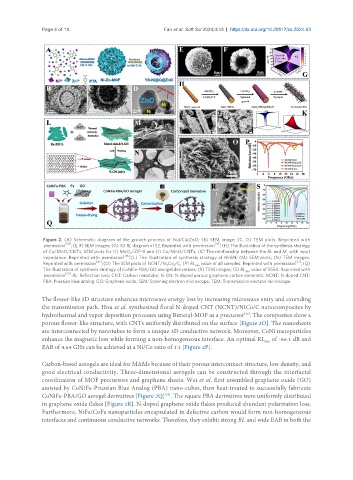
                Figure 2. (A) Schematic diagram of the growth process of Ni@C@ZnO; (B) SEM image; (C, D) TEM plots. Reprinted with
                permission [40] ; (E, F) SEM images; (G) 3D RL diagram of S2. Reprinted with permission [45] ; (H) The illustration of the synthesis strategy
                of Co/MnO/CNTs, SEM plots for (I) MnO /ZIF-8 and (J) Co/MnO/CNTs; (K) The relationship between the RL and M  with input
                                             2
                                                                                                  z
                impedance. Reprinted with  permission [46] ; (L) The illustration of synthesis strategy of N-GN; (M) SEM plots; (N) TEM images.
                Reprinted with permission [47] ; (O) The SEM plots of NCNT/Ni Co /C, (P) RL min  value of all samples. Reprinted with permission [37] ; (Q)
                                                         1
                                                            1
                The illustration of synthesis strategy of CoNiFe-PBA/GO aerogel derivatives; (R) TEM images; (S) RL min  value of S550. Reprinted with
                permission [33] . RL: Reflection loss; CNT: Carbon nanotube; N-GN: N-doped porous graphene carbon nanonets; NCNT: N-doped CNT;
                PBA: Prussian blue analog; GO: Graphene oxide; SEM: Scanning electron microscope; TEM: Transmission electron microscope.
               The flower-like 3D structure enhances microwave energy loss by increasing microwave entry and extending
               the transmission path. Hou et al. synthesized floral N-doped CNT (NCNT)/NiCo/C nanocomposites by
               hydrothermal and vapor deposition processes using Bimetal-MOF as a precursor . The composites show a
                                                                                   [37]
               porous flower-like structure, with CNTs uniformly distributed on the surface [Figure 2O]. The nanosheets
               are interconnected by nanotubes to form a unique 3D conductive network. Moreover, CoNi nanoparticles
               enhance the magnetic loss while forming a non-homogeneous interface. An optimal RL  of -66.1 dB and
                                                                                          min
               EAB of 4.64 GHz can be achieved at a Ni/Co ratio of 1:1 [Figure 2P].


               Carbon-based aerogels are ideal for MAMs because of their porous interconnect structure, low density, and
               good electrical conductivity. Three-dimensional aerogels can be constructed through the interfacial
               coordination of MOF precursors and graphene sheets. Wei et al. first assembled graphene oxide (GO)
               assisted by CoNiFe-Prussian Blue Analog (PBA) nano-cubes, then heat-treated to successfully fabricate
               CoNiFe-PBA/GO aerogel derivatives [Figure 2Q] . The square PBA derivatives were uniformly distributed
                                                         [33]
               in graphene oxide flakes [Figure 2R]. N-doped graphene oxide flakes produced abundant polarization loss.
               Furthermore, NiFe/CoFe nanoparticles encapsulated in defective carbon would form non-homogeneous
               interfaces and continuous conductive networks. Therefore, they exhibit strong RL and wide EAB in both the

