


Page 144 - Read Online
P. 144
Page 34 of 57                                                       Zheng et al. Soft Sci. 2026, 6, 32


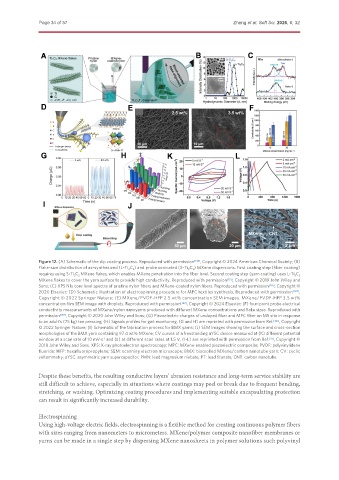
               Figure 12. (A) Schematic of the dip coating process. Reproduced with permission [146] , Copyright © 2024 American Chemical Society; (B)
               Flake-size distribution of as-synthesized (L-Ti 3 C 2 ) and probe sonicated (S-Ti 3 C 2 ) MXene dispersions. First coating step (fiber coating)
               requires using S-Ti 3 C 2  MXene flakes, which enables MXene penetration into the fiber level. Second coating step (yarn coating) uses L-Ti 3 C 2
               MXene flakes to cover the yarn surface to provide high conductivity. Reproduced with permission [121] , Copyright © 2019 John Wiley and
               Sons; (C) XPS N1s core level spectra of pristine nylon fibers and MXene-coated nylon fibers. Reproduced with permission [136] , Copyright ©
               2020 Elsevier; (D) Schematic illustration of electrospinning procedure for MPC textiles synthesis. Reproduced with permission [147] ,
               Copyright © 2022 Springer Nature; (E) MXene/PVDF-HFP 2.5 wt% concentration SEM images. MXene/PVDF-HFP 3.5 wt%
               concentration film SEM image with droplets. Reproduced with permission [148] , Copyright © 2024 Elsevier; (F) four-point probe electrical
               conductivity measurements of MXene/nylon nanoyarns produced with different MXene concentrations and flake sizes. Reproduced with
               permission [149] , Copyright © 2020 John Wiley and Sons; (G) Piezoelectric charges of undoped fiber and MPC fiber on M5 site in response
               to an adult’s (75 kg) toe pressing; (H) Signals profiles for gait monitoring. (G and H) are reprinted with permission from Ref. [147] , Copyright
               © 2022 Springer Nature; (I) Schematic of the fabrication process for BMX yarns; (J) SEM images showing the surface and cross-section
               morphologies of the BMX yarn containing 97.4 wt% MXene; CV curves of a freestanding aYSC device measured at (K) different potential
               window at a scan rate of 10 mV·s  and (L) at different scan rates at 1.5 V. (I-L) are reprinted with permission from Ref. [31] , Copyright ©
                                     -1
               2018 John Wiley and Sons. XPS: X-ray photoelectron spectroscopy; MPC: MXene-enabled piezoelectric composite; PVDF: polyvinylidene
               fluoride; HFP: hexafluoropropylene; SEM: scanning electron microscope; BMX: biscrolled MXene/carbon nanotube yarn; CV: cyclic
               voltammetry; aYSC: asymmetric yarn supercapacitor; PMN: lead magnesium niobate; PT: lead titanate; CNT: carbon nanotube.

               Despite these benefits, the resulting conductive layers’ abrasion resistance and long-term service stability are
               still difficult to achieve, especially in situations where coatings may peel or break due to frequent bending,
               stretching, or washing. Optimizing coating procedures and implementing suitable encapsulating protection
               can result in significantly increased durability.

               Electrospinning
               Using high-voltage electric fields, electrospinning is a flexible method for creating continuous polymer fibers
               with sizes ranging from nanometers to micrometers. MXene/polymer composite nanofiber membranes or
               yarns can be made in a single step by dispersing MXene nanosheets in polymer solutions such polyvinyl

