


Page 113 - Read Online
P. 113
Zheng et al. Soft Sci. 2026, 6, 32                                                Page 3 of 57


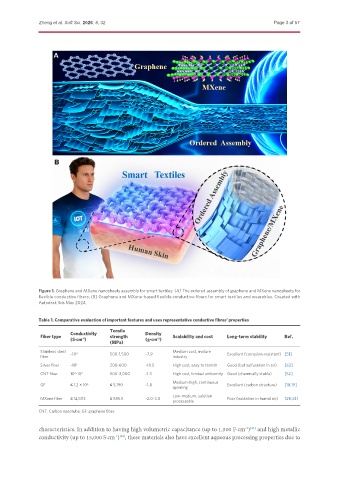
               Figure 1. Graphene and MXene nanosheets assembly for smart textiles: (A) The ordered assembly of graphene and MXene nanosheets for
               flexible conductive fibers; (B) Graphene and MXene-based flexible conductive fibers for smart textiles and wearables. Created with
               Autodesk 3ds Max 2024.


               Table 1. Comparative evaluation of important features and uses representative conductive fibres’ properties
                                        Tensile
                          Conductivity              Density
               Fiber type               strength              Scalability and cost  Long-term stability  Ref.
                          (S·cm )                   (g·cm )
                              -1
                                                        -3
                                        (MPa)
               Stainless steel  ~10 4   500-1,500   ~7.9      Medium cost, mature  Excellent (corrosion-resistant) [51]
               fiber                                          industry
               Silver fiber  ~10 5      200-600     ~10.5     High cost, easy to tarnish  Good (but sulfuration in air)  [62]
               CNT fiber  10 -10 5      500-2,000   ~1.3      High cost, limited uniformity Good (chemically stable)  [52]
                           3
                                                              Medium-high, continuous
               GF         ≤ 1.2 × 10 6  ≤ 5,190     ~1.8                         Excellent (carbon structure)  [18,19]
                                                              spinning
                                                              Low-medium, solution
               MXene fiber  ≤ 12,503    ≤ 585.5     ~2.0-3.0                     Poor (oxidation in humid air)  [26,34]
                                                              processable
               CNT: Carbon nanotube; GF: graphene fiber.

               characteristics. In addition to having high volumetric capacitance (up to 1,500 F·cm )  and high metallic
                                                                                       -3 [21]
               conductivity (up to 15,000 S·cm ) , these materials also have excellent aqueous processing properties due to
                                         -1 [22]

