


Page 61 - Read Online
P. 61
Page 4 of 23                              Du et al. Soft Sci 2024;4:35  https://dx.doi.org/10.20517/ss.2024.31


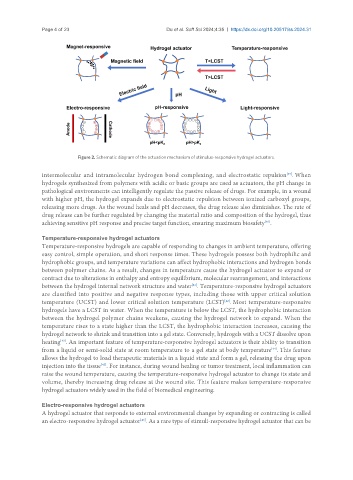
                           Figure 2. Schematic diagram of the actuation mechanism of stimulus-responsive hydrogel actuators.

               intermolecular and intramolecular hydrogen bond complexing, and electrostatic repulsion . When
                                                                                                  [39]
               hydrogels synthesized from polymers with acidic or basic groups are used as actuators, the pH change in
               pathological environments can intelligently regulate the passive release of drugs. For example, in a wound
               with higher pH, the hydrogel expands due to electrostatic repulsion between ionized carboxyl groups,
               releasing more drugs. As the wound heals and pH decreases, the drug release also diminishes. The rate of
               drug release can be further regulated by changing the material ratio and composition of the hydrogel, thus
               achieving sensitive pH response and precise target function, ensuring maximum biosafety .
                                                                                          [40]

               Temperature-responsive hydrogel actuators
               Temperature-responsive hydrogels are capable of responding to changes in ambient temperature, offering
               easy control, simple operation, and short response times. These hydrogels possess both hydrophilic and
               hydrophobic groups, and temperature variations can affect hydrophobic interactions and hydrogen bonds
               between polymer chains. As a result, changes in temperature cause the hydrogel actuator to expand or
               contract due to alterations in enthalpy and entropy equilibrium, molecular rearrangement, and interactions
                                                                  [41]
               between the hydrogel internal network structure and water . Temperature-responsive hydrogel actuators
               are classified into positive and negative response types, including those with upper critical solution
                                                                             [42]
               temperature (UCST) and lower critical solution temperature (LCST) . Most temperature-responsive
               hydrogels have a LCST in water. When the temperature is below the LCST, the hydrophobic interaction
               between the hydrogel polymer chains weakens, causing the hydrogel network to expand. When the
               temperature rises to a state higher than the LCST, the hydrophobic interaction increases, causing the
               hydrogel network to shrink and transition into a gel state. Conversely, hydrogels with a UCST dissolve upon
               heating . An important feature of temperature-responsive hydrogel actuators is their ability to transition
                     [43]
               from a liquid or semi-solid state at room temperature to a gel state at body temperature . This feature
                                                                                            [44]
               allows the hydrogel to load therapeutic materials in a liquid state and form a gel, releasing the drug upon
               injection into the tissue . For instance, during wound healing or tumor treatment, local inflammation can
                                   [45]
               raise the wound temperature, causing the temperature-responsive hydrogel actuator to change its state and
               volume, thereby increasing drug release at the wound site. This feature makes temperature-responsive
               hydrogel actuators widely used in the field of biomedical engineering.


               Electro-responsive hydrogel actuators
               A hydrogel actuator that responds to external environmental changes by expanding or contracting is called
               an electro-responsive hydrogel actuator . As a rare type of stimuli-responsive hydrogel actuator that can be
                                                [46]

