


Page 5 - Read Online
P. 5
Brasier et al. Soft Sci 2024;4:6  https://dx.doi.org/10.20517/ss.2023.39         Page 3 of 10


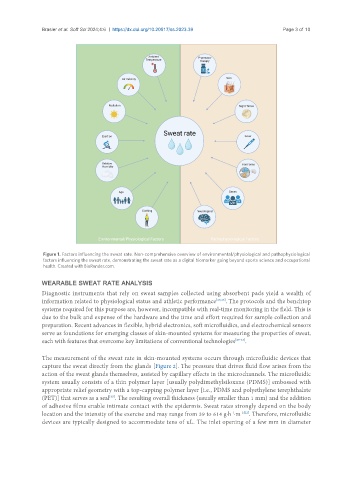
                Figure 1. Factors influencing the sweat rate. Non-comprehensive overview of environmental/physiological and pathophysiological
                factors influencing the sweat rate, demonstrating the sweat rate as a digital biomarker going beyond sports science and occupational
                health. Created with BioRender.com.

               WEARABLE SWEAT RATE ANALYSIS
               Diagnostic instruments that rely on sweat samples collected using absorbent pads yield a wealth of
               information related to physiological status and athletic performance [27,28] . The protocols and the benchtop
               systems required for this purpose are, however, incompatible with real-time monitoring in the field. This is
               due to the bulk and expense of the hardware and the time and effort required for sample collection and
               preparation. Recent advances in flexible, hybrid electronics, soft microfluidics, and electrochemical sensors
               serve as foundations for emerging classes of skin-mounted systems for measuring the properties of sweat,
               each with features that overcome key limitations of conventional technologies [29-33] .

               The measurement of the sweat rate in skin-mounted systems occurs through microfluidic devices that
               capture the sweat directly from the glands [Figure 2]. The pressure that drives fluid flow arises from the
               action of the sweat glands themselves, assisted by capillary effects in the microchannels. The microfluidic
               system usually consists of a thin polymer layer [usually polydimethylsiloxane (PDMS)] embossed with
               appropriate relief geometry with a top-capping polymer layer [i.e., PDMS and polyethylene terephthalate
               (PET)] that serves as a seal . The resulting overall thickness (usually smaller than 1 mm) and the addition
                                      [33]
               of adhesive films enable intimate contact with the epidermis. Sweat rates strongly depend on the body
               location and the intensity of the exercise and may range from 39 to 614 g·h ·m -2[22] . Therefore, microfluidic
                                                                               -1
               devices are typically designed to accommodate tens of uL. The inlet opening of a few mm in diameter

