


Page 114 - Read Online
P. 114
Kant et al. Plast Aesthet Res. 2026;13:4                                          Page 7 of 20


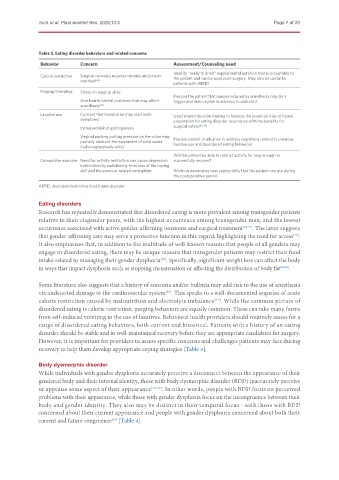
               Table 3. Eating disorder behaviors and related concerns
               Behavior      Concern                          Assessment/Counseling need

                                                              Identify “ready to drink” supplemental nutrition that is acceptable to
               Calorie restriction  Surgical recovery requires calories and proper  the patient and can be used post-surgery. May also be useful for
                             nutrition [42]
                                                              patients with ARFID
               Purging/Vomiting  Stress on surgical sites
                                                              Prepare the patient that nausea induced by anesthesia may be a
                             Oral health/dental problems that may affect  trigger and make a plan in advance to address it
                             anesthesia [43]
               Laxative use  Concern that bowel prep may reactivate  Used shared decision making to balance the potential risks of bowel
                             symptoms                         preparation for eating disorder recurrence with the benefits for
                             Increased risk of gastroparesis  surgical safety [44-47]
                             Vaginal packing putting pressure on the colon may  Prepare patient in advance to address cognitions related to previous
                             partially obstruct the movement of solid waste  laxative use and disordered eating behaviors
                             (vulvovaginoplasty only)
                                                              Will the patient be able to restrict activity for long enough to
               Compulsive exercise Need for activity restriction can cause depression  successfully recover?
                             both indirectly and directly from loss of the coping
                             skill and the exercise-related endorphins  Work on developing new coping skills that the patient can use during
                                                              the postoperative period
               ARFID: Avoidant/restrictive food intake disorder.


               Eating disorders
               Research has repeatedly demonstrated that disordered eating is more prevalent among transgender patients
               relative to their cisgender peers, with the highest occurrence among transgender men, and the lowest
               occurrence associated with active gender-affirming hormone and surgical treatment [36,37] . The latter suggests
               that gender-affirming care may serve a protective function in this regard, highlighting the need for access .
                                                                                                        [38]
               It also emphasizes that, in addition to the multitude of well-known reasons that people of all genders may
               engage in disordered eating, there may be unique reasons that transgender patients may restrict their food
               intake related to managing their gender dysphoria . Specifically, significant weight loss can affect the body
                                                         [39]
               in ways that impact dysphoria such as stopping menstruation or affecting the distribution of body fat [36,39] .

               Some literature also suggests that a history of anorexia and/or bulimia may add risk to the use of anesthesia
               via undetected damage to the cardiovascular system . This speaks to a well-documented sequelae of acute
                                                           [40]
               calorie restriction caused by malnutrition and electrolyte imbalance . While the common picture of
                                                                            [41]
               disordered eating is calorie restriction, purging behaviors are equally common. These can take many forms
               from self-induced vomiting to the use of laxatives. Behavioral health providers should routinely assess for a
               range of disordered eating behaviors, both current and historical. Patients with a history of an eating
               disorder should be stable and in well-maintained recovery before they are appropriate candidates for surgery.
               However, it is important for providers to assess specific concerns and challenges patients may face during
               recovery to help them develop appropriate coping strategies [Table 3].


               Body dysmorphic disorder
               While individuals with gender dysphoria accurately perceive a disconnect between the appearance of their
               gendered body and their internal identity, those with body dysmorphic disorder (BDD) inaccurately perceive
               or appraise some aspect of their appearance [48,49] . In other words, people with BDD focus on perceived
               problems with their appearance, while those with gender dysphoria focus on the incongruence between their
               body and gender identity. They also may be distinct in their temporal focus - with those with BDD
              concerned about their current appearance and people with gender dysphoria concerned about both their

              current and future congruence  [Table 4].
                                        [50]

