


Page 70 - Read Online
P. 70
Li et al. Metab Target Organ Damage. 2025;5:19  https://dx.doi.org/10.20517/mtod.2025.05  Page 5 of 8


                                                 [2]
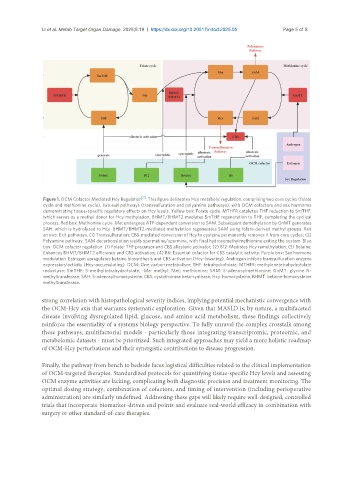
                Figure 1. OCM Cofactor Mediated Hcy Regulation : This figure delineates Hcy metabolic regulation, comprising two core cycles (folate
                cycle and methionine cycle), two exit pathways (transsulfuration and polyamine pathways), with OCM cofactors and sex hormones
                demonstrating tissue-specific regulatory effects on Hcy levels. Yellow box: Folate cycle. MTHFR catalyzes THF reduction to 5mTHF,
                which serves as a methyl donor for Hcy methylation. BHMT/BHMT2 mediates 5mTHF regeneration to THF, completing the cyclical
                process. Red box: Methionine cycle. Met undergoes ATP-dependent conversion to SAM. Subsequent demethylation by GnMT generates
                SAH, which is hydrolyzed to Hcy. BHMT/BHMT2-mediated methylation regenerates SAM using folate-derived methyl groups. Red
                arrows: Exit pathways. (1) Transsulfuration: CBS-mediated conversion of Hcy to cysteine permanently removes it from core cycles; (2)
                Polyamine pathway: SAM decarboxylation yields spermidine/spermine, with final hydroxymethylmethionine exiting the system. Blue
                box: OCM cofactor regulation. (1) Folate: THF precursor and CBS allosteric activator; (2) B12: Mediates Hcy remethylation; (3) Betaine:
                Enhances BHMT/BHMT2 efficiency and CBS activation; (4) B6: Essential cofactor for CBS catalytic activity. Purple box: Sex hormone
                modulation. Estrogen upregulates betaine biosynthesis and CBS activation (Hcy-lowering). Androgen inhibits transsulfuration enzyme
                expression/activity (Hcy-accumulating). OCM: One-carbon metabolism; THF: tetrahydrofolate; MTHFR: methylenetetrahydrofolate
                reductase; 5mTHF: 5-methyltetrahydrofolate; -Me: methyl; Met: methionine; SAM: S-adenosylmethionine; GnMT: glycine N-
                methyltransferase; SAH: S-adenosylhomocysteine; CBS: cystathionine beta-synthase; Hcy: homocysteine; BHMT: betaine-homocysteine
                methyltransferase.

               strong correlation with histopathological severity indices, implying potential mechanistic convergence with
               the OCM-Hcy axis that warrants systematic exploration. Given that MASLD is, by nature, a multifaceted
               disease involving dysregulated lipid, glucose, and amino acid metabolism, these findings collectively
               reinforce the essentiality of a systems biology perspective. To fully unravel the complex crosstalk among
               these pathways, multifactorial models - particularly those integrating transcriptomic, proteomic, and
               metabolomic datasets - must be prioritized. Such integrated approaches may yield a more holistic roadmap
               of OCM-Hcy perturbations and their synergistic contributions to disease progression.


               Finally, the pathway from bench to bedside faces logistical difficulties related to the clinical implementation
               of OCM-targeted therapies. Standardized protocols for quantifying tissue-specific Hcy levels and assessing
               OCM enzyme activities are lacking, complicating both diagnostic precision and treatment monitoring. The
               optimal dosing strategy, combination of cofactors, and timing of intervention (including perioperative
               administration) are similarly undefined. Addressing these gaps will likely require well-designed, controlled
               trials that incorporate biomarker-driven end points and evaluate real-world efficacy in combination with
               surgery or other standard-of-care therapies.

