


Page 13 - Read Online
P. 13
Page 8 of 13                  Zhao et al. Microbiome Res Rep. 2025;4:28  https://dx.doi.org/10.20517/mrr.2025.12


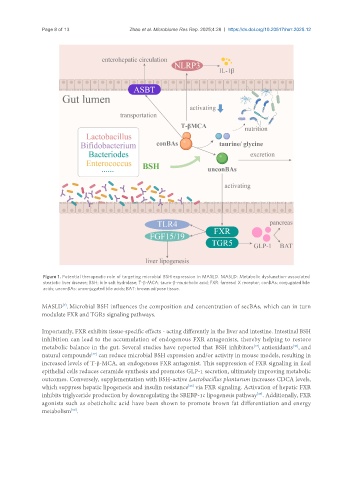
                Figure 1. Potential therapeutic role of targeting microbial BSH expression in MASLD. MASLD: Metabolic dysfunction-associated
                steatotic liver disease; BSH: bile salt hydrolase; T-β-MCA: tauro-β-muricholic acid; FXR: farnesol X receptor; conBAs: conjugated bile
                acids; unconBAs: unconjugated bile acids; BAT: brown adipose tissue.


               MASLD . Microbial BSH influences the composition and concentration of secBAs, which can in turn
                      [7]
               modulate FXR and TGR5 signaling pathways.

               Importantly, FXR exhibits tissue-specific effects - acting differently in the liver and intestine. Intestinal BSH
               inhibition can lead to the accumulation of endogenous FXR antagonists, thereby helping to restore
                                                                                                    [46]
               metabolic balance in the gut. Several studies have reported that BSH inhibitors , antioxidants , and
                                                                                      [17]
               natural compounds  can reduce microbial BSH expression and/or activity in mouse models, resulting in
                                [47]
               increased levels of T-β-MCA, an endogenous FXR antagonist. This suppression of FXR signaling in ileal
               epithelial cells reduces ceramide synthesis and promotes GLP-1 secretion, ultimately improving metabolic
               outcomes. Conversely, supplementation with BSH-active Lactobacillus plantarum increases CDCA levels,
               which suppress hepatic lipogenesis and insulin resistance  via FXR signaling. Activation of hepatic FXR
                                                                [48]
                                                                                        [49]
               inhibits triglyceride production by downregulating the SREBP-1c lipogenesis pathway . Additionally, FXR
               agonists such as obeticholic acid have been shown to promote brown fat differentiation and energy
                         [50]
               metabolism .

