


Page 9 - Read Online
P. 9
Page 4 of 13                  Zhao et al. Microbiome Res Rep. 2025;4:28  https://dx.doi.org/10.20517/mrr.2025.12

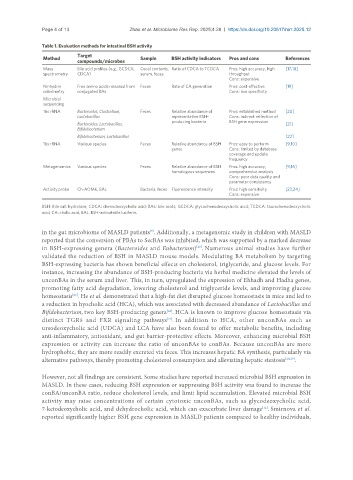
               Table 1. Evaluation methods for intestinal BSH activity
                           Target
                Method                          Sample     BSH activity indicators  Pros and cons  References
                           compounds/microbes
                Mass       Bile acid profiles (e.g., GCDCA,   Cecal contents,  Ratio of CDCA to TCDCA  Pros: high accuracy, high   [17,18]
                spectrometry  CDCA)             serum, feces                  throughput
                                                                              Cons: expensive
                Ninhydrin   Free amino acids released from  Feces  Rate of CA generation  Pros: cost-effective   [19]
                colorimetry  conjugated BAs                                   Cons: low specificity
                Microbial
                sequencing
                16s rRNA   Bacteroides, Clostridium,   Feces  Relative abundance of   Pros: established method   [20]
                           Lactobacillus                   representative BSH-  Cons: indirect reflection of
                                                           producing bacteria  BSH gene expression
                           Bacteroides, Lactobacillus,                                           [21]
                           Bifidobacterium
                           Bifidobacterium, Lactobacillus                                        [22]
                16s rRNA   Various species      Feces      Relative abundance of BSH   Pros: easy to perform   [9,10]
                                                           genes              Cons: limited by database
                                                                              coverage and update
                                                                              frequency
                Metagenomics  Various species   Feces      Relative abundance of BSH   Pros: high accuracy,   [9,16]
                                                           homologous sequences  comprehensive analysis
                                                                              Cons: poor data quality and
                                                                              parameter consistency
                Activity probe  Ch-AOMK, BAL    Bacteria, feces Fluorescence intensity  Pros: high sensitivity   [23,24]
                                                                              Cons: expensive
               BSH: Bile salt hydrolase; CDCA: chenodeoxycholic acid; BAs: bile acids; GCDCA: glycochenodeoxycholic acid; TCDCA: taurochenodeoxycholic
               acid; CA: cholic acid; BAL: BSH-activatable luciferin.


               in the gut microbiome of MASLD patients . Additionally, a metagenomic study in children with MASLD
                                                    [9]
               reported that the conversion of PBAs to SecBAs was inhibited, which was supported by a marked decrease
               in BSH-expressing genera (Bacteroides and Eubacterium) . Numerous animal studies have further
                                                                   [25]
               validated the reduction of BSH in MASLD mouse models. Modulating BA metabolism by targeting
               BSH-expressing bacteria has shown beneficial effects on cholesterol, triglyceride, and glucose levels. For
               instance, increasing the abundance of BSH-producing bacteria via herbal medicine elevated the levels of
               unconBAs in the serum and liver. This, in turn, upregulated the expression of Ehhadh and Hadha genes,
               promoting fatty acid degradation, lowering cholesterol and triglyceride levels, and improving glucose
               homeostasis . He et al. demonstrated that a high-fat diet disrupted glucose homeostasis in mice and led to
                         [26]
               a reduction in hyocholic acid (HCA), which was associated with decreased abundance of Lactobacillus and
                                                         [22]
               Bifidobacterium, two key BSH-producing genera . HCA is known to improve glucose homeostasis via
               distinct  TGR5  and  FXR  signaling  pathways . In  addition  to  HCA,  other  unconBAs  such  as
                                                         [27]
               ursodeoxycholic acid (UDCA) and LCA have also been found to offer metabolic benefits, including
               anti-inflammatory, antioxidant, and gut barrier-protective effects. Moreover, enhancing microbial BSH
               expression or activity can increase the ratio of unconBAs to conBAs. Because unconBAs are more
               hydrophobic, they are more readily excreted via feces. This increases hepatic BA synthesis, particularly via
               alternative pathways, thereby promoting cholesterol consumption and alleviating hepatic steatosis [28,29] .

               However, not all findings are consistent. Some studies have reported increased microbial BSH expression in
               MASLD. In these cases, reducing BSH expression or suppressing BSH activity was found to increase the
               conBA/unconBA ratio, reduce cholesterol levels, and limit lipid accumulation. Elevated microbial BSH
               activity may raise concentrations of certain cytotoxic unconBAs, such as glycodeoxycholic acid,
                                                                                         [11]
               7-ketodeoxycholic acid, and dehydrocholic acid, which can exacerbate liver damage . Smirnova et al.
               reported significantly higher BSH gene expression in MASLD patients compared to healthy individuals,

