


Page 89 - Read Online
P. 89
Page 4 of 7              Chang et al. Mini-invasive Surg 2024;8:15  https://dx.doi.org/10.20517/2574-1225.2023.137


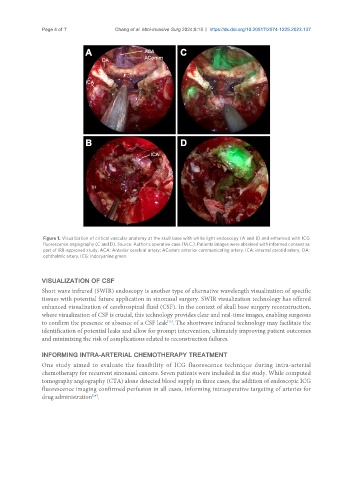
                Figure 1. Visualization of critical vascular anatomy at the skull base with white light endoscopy (A and B) and enhanced with ICG
                fluorescence angiography (C and D). Source: Author’s operative case (M.C.). Patients images were obtained with informed consent as
                part of IRB-approved study. ACA: Anterior cerebral artery; AComm: anterior communicating artery; ICA: internal carotid artery; OA:
                ophthalmic artery; ICG: indocyanine green.


               VISUALIZATION OF CSF
               Short wave infrared (SWIR) endoscopy is another type of alternative wavelength visualization of specific
               tissues with potential future application in sinonasal surgery. SWIR visualization technology has offered
               enhanced visualization of cerebrospinal fluid (CSF). In the context of skull base surgery reconstruction,
               where visualization of CSF is crucial, this technology provides clear and real-time images, enabling surgeons
                                                         [23]
               to confirm the presence or absence of a CSF leak . The shortwave infrared technology may facilitate the
               identification of potential leaks and allow for prompt intervention, ultimately improving patient outcomes
               and minimizing the risk of complications related to reconstruction failures.


               INFORMING INTRA-ARTERIAL CHEMOTHERAPY TREATMENT
               One study aimed to evaluate the feasibility of ICG fluorescence technique during intra-arterial
               chemotherapy for recurrent sinonasal cancers. Seven patients were included in the study. While computed
               tomography angiography (CTA) alone detected blood supply in three cases, the addition of endoscopic ICG
               fluorescence imaging confirmed perfusion in all cases, informing intraoperative targeting of arteries for
               drug administration .
                                [24]

