


Page 44 - Read Online
P. 44
Kamal et al. J Transl Genet Genom 2024;8:162-85  https://dx.doi.org/10.20517/jtgg.2023.55   Page 168


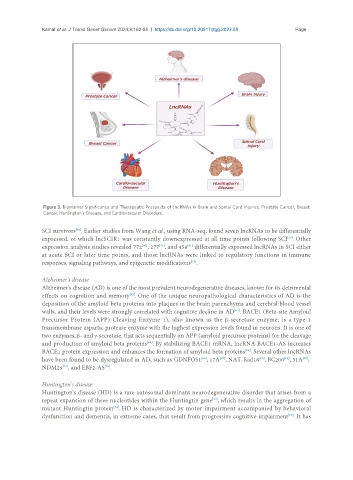
                Figure 3. Biomarker Significance and Therapeutic Prospects of LncRNAs in Brain and Spinal Cord Injuries, Prostate Cancer, Breast
                Cancer, Huntington’s Disease, and Cardiovascular Disorders.


                           [58]
               SCI survivors . Earlier studies from Wang et al., using RNA-seq, found seven lncRNAs to be differentially
                                                                                                  [59]
               expressed, of which lncSCIR1 was constantly downexpressed at all time points following SCI . Other
                                                                [61]
                                                       [14]
               expression analysis studies revealed 772 , 277 , and 458  differentially expressed lncRNAs in SCI either
                                                 [60]
               at acute SCI or later time points, and those lncRNAs were linked to regulatory functions in immune
               responses, signaling pathways, and epigenetic modifications .
                                                                 [14]
               Alzheimer's disease
               Alzheimer's disease (AD) is one of the most prevalent neurodegenerative diseases, known for its detrimental
               effects on cognition and memory . One of the unique neuropathological characteristics of AD is the
                                             [62]
               deposition of the amyloid beta proteins into plaques in the brain parenchyma and cerebral blood vessel
                                                                                [63]
               walls, and their levels were strongly correlated with cognitive decline in AD . BACE1 (Beta-site Amyloid
               Precursor Protein (APP) Cleaving Enzyme 1), also known as the  β-secretase enzyme, is a type 1
               transmembrane aspartic protease enzyme with the highest expression levels found in neurons. It is one of
               two enzymes, β- and γ-secretase, that acts sequentially on APP (amyloid precursor proteins) for the cleavage
                                                   [64]
               and production of amyloid beta proteins . By stabilizing BACE1 mRNA, lncRNA BACE1-AS increases
               BACE1 protein expression and enhances the formation of amyloid beta proteins . Several other lncRNAs
                                                                                    [65]
                                                                     [66]
                                                                                        [68]
                                                                           [67]
               have been found to be dysregulated in AD, such as GDNFOS1 , 17A , NAT-Rad18 , BC200 , 51A ,
                                                                                                       [70]
                                                                                                 [69]
               NDM29 , and EBF2-AS .
                      [71]
                                    [72]
               Huntington's disease
               Huntington's disease (HD) is a rare autosomal dominant neurodegenerative disorder that arises from a
               repeat expansion of three nucleotides within the Huntingtin gene , which results in the aggregation of
                                                                         [73]
               mutant Huntingtin protein . HD is characterized by motor impairment accompanied by behavioral
                                       [74]
               dysfunction and dementia, in extreme cases, that result from progressive cognitive impairment . It has
                                                                                                  [75]

