


Page 40 - Read Online
P. 40
Kamal et al. J Transl Genet Genom 2024;8:162-85  https://dx.doi.org/10.20517/jtgg.2023.55   Page 164


                                                                                  [12]
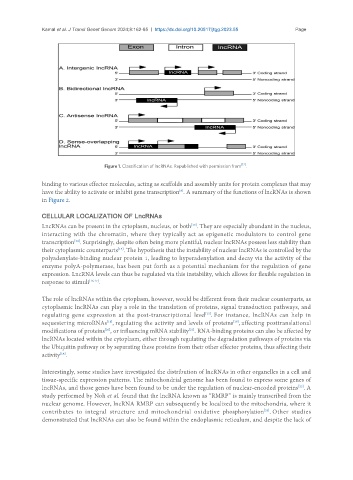
                                    Figure 1. Classification of lncRNAs. Republished with permission from  .

               binding to various effector molecules, acting as scaffolds and assembly units for protein complexes that may
                                                             [6]
               have the ability to activate or inhibit gene transcription . A summary of the functions of lncRNAs is shown
               in Figure 2.

               CELLULAR LOCALIZATION OF LncRNAs
               LncRNAs can be present in the cytoplasm, nucleus, or both . They are especially abundant in the nucleus,
                                                                 [13]
               interacting with the chromatin, where they typically act as epigenetic modulators to control gene
                          [14]
               transcription . Surprisingly, despite often being more plentiful, nuclear lncRNAs possess less stability than
               their cytoplasmic counterparts . The hypothesis that the instability of nuclear lncRNAs is controlled by the
                                         [15]
               polyadenylate-binding nuclear protein 1, leading to hyperadenylation and decay via the activity of the
               enzyme polyA-polymerase, has been put forth as a potential mechanism for the regulation of gene
               expression. LncRNA levels can thus be regulated via this instability, which allows for flexible regulation in
               response to stimuli [16,17] .


               The role of lncRNAs within the cytoplasm, however, would be different from their nuclear counterparts, as
               cytoplasmic lncRNAs can play a role in the translation of proteins, signal transduction pathways, and
                                                                      [15]
               regulating gene expression at the post-transcriptional level . For instance, lncRNAs can help in
                                     [18]
               sequestering microRNAs , regulating the activity and levels of proteins , affecting posttranslational
                                                                                [19]
               modifications of proteins , or influencing mRNA stability . RNA-binding proteins can also be affected by
                                                                 [21]
                                    [20]
               lncRNAs located within the cytoplasm, either through regulating the degradation pathways of proteins via
               the Ubiquitin pathway or by separating these proteins from their other effector proteins, thus affecting their
               activity .
                     [14]
               Interestingly, some studies have investigated the distribution of lncRNAs in other organelles in a cell and
               tissue-specific expression patterns. The mitochondrial genome has been found to express some genes of
                                                                                                      [22]
               lncRNAs, and those genes have been found to be under the regulation of nuclear-encoded proteins . A
               study performed by Noh et al. found that the lncRNA known as “RMRP” is mainly transcribed from the
               nuclear genome. However, lncRNA RMRP can subsequently be localized to the mitochondria, where it
               contributes  to  integral  structure  and  mitochondrial  oxidative  phosphorylation . Other  studies
                                                                                          [23]
               demonstrated that lncRNAs can also be found within the endoplasmic reticulum, and despite the lack of

