


Page 41 - Read Online
P. 41
Page 165                Kamal et al. J Transl Genet Genom 2024;8:162-85  https://dx.doi.org/10.20517/jtgg.2023.55


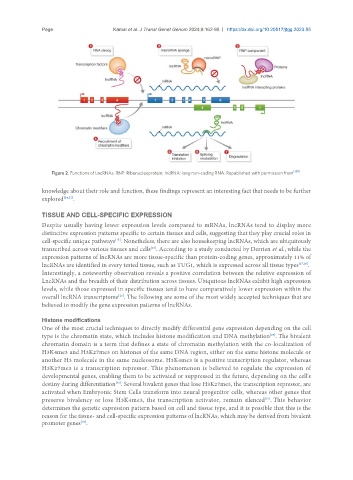
                  Figure 2. Functions of LncRNAs. RNP: Ribonucleoprotein; lncRNA: long non-coding RNA. Republished with permission from [159] .

               knowledge about their role and function, these findings represent an interesting fact that needs to be further
               explored [24,25] .


               TISSUE AND CELL-SPECIFIC EXPRESSION
               Despite usually having lower expression levels compared to mRNAs, lncRNAs tend to display more
               distinctive expression patterns specific to certain tissues and cells, suggesting that they play crucial roles in
               cell-specific unique pathways . Nonetheless, there are also housekeeping lncRNAs, which are ubiquitously
                                        [15]
                                                    [26]
               transcribed across various tissues and cells . According to a study conducted by Derrien et al., while the
               expression patterns of lncRNAs are more tissue-specific than protein-coding genes, approximately 11% of
               lncRNAs are identified in every tested tissue, such as TUG1, which is expressed across all tissue types [27,28] .
               Interestingly, a noteworthy observation reveals a positive correlation between the relative expression of
               LncRNAs and the breadth of their distribution across tissues. Ubiquitous lncRNAs exhibit high expression
               levels, while those expressed in specific tissues tend to have comparatively lower expression within the
               overall lncRNA transcriptome . The following are some of the most widely accepted techniques that are
                                         [26]
               believed to modify the gene expression patterns of lncRNAs.

               Histone modifications
               One of the most crucial techniques to directly modify differential gene expression depending on the cell
               type is the chromatin state, which includes histone modification and DNA methylation . The bivalent
                                                                                            [29]
               chromatin domain is a term that defines a state of chromatin methylation with the co-localization of
               H3K4me3 and H3K27me3 on histones of the same DNA region, either on the same histone molecule or
               another H3 molecule in the same nucleosome. H3K4me3 is a positive transcription regulator, whereas
               H3K27me3 is a transcription repressor. This phenomenon is believed to regulate the expression of
               developmental genes, enabling them to be activated or suppressed in the future, depending on the cell's
               destiny during differentiation . Several bivalent genes that lose H3K27me3, the transcription repressor, are
                                        [30]
               activated when Embryonic Stem Cells transform into neural progenitor cells, whereas other genes that
               preserve bivalency or lose H3K4me3, the transcription activator, remain silenced . This behavior
                                                                                          [31]
               determines the genetic expression pattern based on cell and tissue type, and it is possible that this is the
               reason for the tissue- and cell-specific expression patterns of lncRNAs, which may be derived from bivalent
                            [29]
               promoter genes .

