


Page 26 - Read Online
P. 26
Page 218       Bergara-Muguruza et al. J Transl Genet Genom 2023;7:213-229  https://dx.doi.org/10.20517/jtgg.2023.14


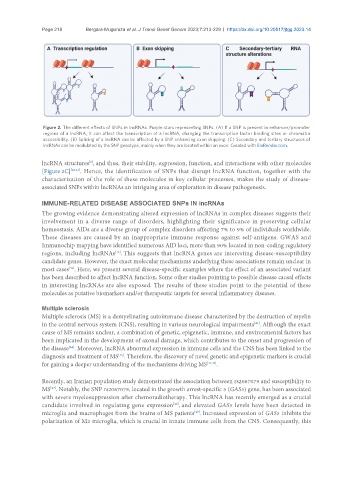
                Figure 2. The different effects of SNPs in lncRNAs. Purple stars representing SNPs. (A) If a SNP is present in enhancer/promoter
                regions of a lncRNA, it can affect the transcription of a lncRNA, changing the transcription factor binding sites or chromatin
                accessibility. (B) Splicing of a lncRNA can be affected by a SNP enhancing exon skipping. (C) Secondary and tertiary structures of
                lncRNAs can be modulated by the SNP genotype, mainly when they are located within an exon. Created with BioRender.com.


               lncRNA structures , and thus, their stability, expression, function, and interactions with other molecules
                               [8]
               [Figure 2C] [40,41] . Hence, the identification of SNPs that disrupt lncRNA function, together with the
               characterization of the role of these molecules in key cellular processes, makes the study of disease-
               associated SNPs within lncRNAs an intriguing area of exploration in disease pathogenesis.

               IMMUNE-RELATED DISEASE ASSOCIATED SNPs IN incRNAs
               The growing evidence demonstrating altered expression of lncRNAs in complex diseases suggests their
               involvement in a diverse range of disorders, highlighting their significance in preserving cellular
               homeostasis. AIDs are a diverse group of complex disorders affecting 7% to 9% of individuals worldwide.
               These diseases are caused by an inappropriate immune response against self-antigens. GWAS and
               Immunochip mapping have identified numerous AID loci, more than 90% located in non-coding regulatory
                                        [12]
               regions, including lncRNAs . This suggests that lncRNA genes are interesting disease-susceptibility
               candidate genes. However, the exact molecular mechanisms underlying these associations remain unclear in
               most cases . Here, we present several disease-specific examples where the effect of an associated variant
                        [42]
               has been described to affect lncRNA function. Some other studies pointing to possible disease causal effects
               in interesting lncRNAs are also exposed. The results of these studies point to the potential of these
               molecules as putative biomarkers and/or therapeutic targets for several inflammatory diseases.

               Multiple sclerosis
               Multiple sclerosis (MS) is a demyelinating autoimmune disease characterized by the destruction of myelin
               in the central nervous system (CNS), resulting in various neurological impairments . Although the exact
                                                                                       [43]
               cause of MS remains unclear, a combination of genetic, epigenetic, immune, and environmental factors has
               been implicated in the development of axonal damage, which contributes to the onset and progression of
                        [44]
               the disease . Moreover, lncRNA abnormal expression in immune cells and the CNS has been linked to the
               diagnosis and treatment of MS . Therefore, the discovery of novel genetic and epigenetic markers is crucial
                                         [45]
               for gaining a deeper understanding of the mechanisms driving MS [45,46] .

               Recently, an Iranian population study demonstrated the association between rs2067079 and susceptibility to
               MS . Notably, the SNP rs2067079, located in the growth arrest-specific 5 (GAS5) gene, has been associated
                  [47]
               with severe myelosuppression after chemoradiotherapy. This lncRNA has recently emerged as a crucial
               candidate involved in regulating gene expression , and elevated GAS5 levels have been detected in
                                                           [48]
               microglia and macrophages from the brains of MS patients . Increased expression of GAS5 inhibits the
                                                                   [49]
               polarization of M2 microglia, which is crucial in innate immune cells from the CNS. Consequently, this

