


Page 23 - Read Online
P. 23
Bergara-Muguruza et al. J Transl Genet Genom 2023;7:213-229  https://dx.doi.org/10.20517/jtgg.2023.14  Page 215


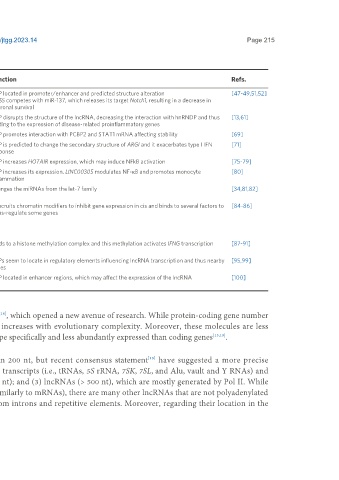
 Table 1. AID-associated lncRNAs and their implication in disease

 Associated
 Autoimmune disease  Associated SNP  Cell type  Function                          Refs.
 lncRNA
 Multiple sclerosis (MS)  GAS5  rs2067079  Microglia  SNP located in promoter/enhancer and predicted structure alteration   [47-49,51,52]
 GAS5 competes with miR-137, which releases its target Notch1, resulting in a decrease in
 neuronal survival
 Celiac disease (CeD)  Lnc13  rs917997  Macrophages  SNP disrupts the structure of the lncRNA, decreasing the interaction with hnRNDP and thus   [13,61]
 leading to the expression of disease-related proinflammatory genes
 Type 1 diabetes (T1D)  Lnc13  rs917997  Pancreatic β-cells  SNP promotes interaction with PCBP2 and STAT1 mRNA affecting stability  [69]
 ARGI  rs9585056  Pancreatic β-cells  SNP is predicted to change the secondary structure of ARGI and it exacerbates type I IFN   [71]
 response
 Psoriasis  HOTAIR  rs12826786  Macrophages  SNP increases HOTAIR expression, which may induce NFkB activation  [75-79]
 Atherosclerosis  LINC00305  rs2850711  Monocytes  SNP increases its expression. LINC00305 modulates NF-κB and promotes monocyte   [80]
 inflammation
 H19  rs217727  Atherosclerotic   Sponges the miRNAs from the let-7 family        [34,81,82]
 plaques

 ANRIL  rs10811656   Endothelial cells  It recruits chromatin modifiers to inhibit gene expression in cis and binds to several factors to   [84-86]
 rs10757278   trans-regulate some genes
 rs10757274 rs2383206
 rs2383207 rs10757278
 rs7865618
 Inflammatory bowel   IFNG-AS1  rs7134599  Intestinal cells  Binds to a histone methylation complex and this methylation activates IFNG transcription  [87-91]
 disease (IBD)

 Rheumatoid arthritis  FAM211A-AS1  rs2882581, rs3744281 and   Fibroblast-like   SNPs seem to locate in regulatory elements influencing lncRNA transcription and thus nearby  [95,99]
 rs3760235  synoviocytes  genes
 Systemic lupus   IL21-AS1  rs62324212  T cells  SNP located in enhancer regions, which may affect the expression of the lncRNA  [100]
 erythematosus


 important biological functions, many of them corresponding to lncRNA family , which opened a new avenue of research. While protein-coding gene number
 [18]
 is similar between highly disparate animal species, the amount of lncRNAs increases with evolutionary complexity. Moreover, these molecules are less

 conserved than protein-coding genes, present fewer exons, and are more cell-type specifically and less abundantly expressed than coding genes [15,19] .


 So far, lncRNAs have been defined as non-coding transcripts of more than 200 nt, but recent consensus statement  have suggested a more precise
                                                     [19]
 categorization of non-coding RNAs into: (1) small RNAs (< 50 nt); (2) Pol III transcripts (i.e., tRNAs, 5S rRNA, 7SK, 7SL, and Alu, vault and Y RNAs) and
 small Pol II transcripts such as snRNAs or intron-derived snoRNAs (~50-500 nt); and (3) lncRNAs (> 500 nt), which are mostly generated by Pol II. While

 many lncRNAs are transcribed by Pol II and are spliced and polyadenylated (similarly to mRNAs), there are many other lncRNAs that are not polyadenylated
 or 5′ capped, are expressed from other RNA polymerases or are processed from introns and repetitive elements. Moreover, regarding their location in the

