


Page 90 - Read Online
P. 90
Page 6 of 9                                                       Wang et al. J. Mater. Inf. 2026, 6, 1


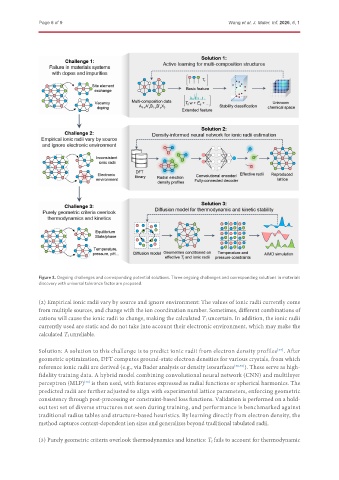
               Figure 3. Ongoing challenges and corresponding potential solutions. Three ongoing challenges and corresponding solutions in materials
               discovery with universal tolerance factor are proposed.

               (2) Empirical ionic radii vary by source and ignore environment: The values of ionic radii currently come
               from multiple sources, and change with the ion coordination number. Sometimes, different combinations of
               cations will cause the ionic radii to change, making the calculated T f uncertain. In addition, the ionic radii
               currently used are static and do not take into account their electronic environment, which may make the
               calculated T f unreliable.


               Solution: A solution to this challenge is to predict ionic radii from electron density profiles . After
                                                                                                  [37]
               geometric optimization, DFT computes ground-state electron densities for various crystals, from which
               reference ionic radii are derived (e.g., via Bader analysis or density isosurfaces [38,39] ). These serve as high-
               fidelity training data. A hybrid model combining convolutional neural network (CNN) and multilayer
               perceptron (MLP)  is then used, with features expressed as radial functions or spherical harmonics. The
                               [40]
               predicted radii are further adjusted to align with experimental lattice parameters, enforcing geometric
               consistency through post-processing or constraint-based loss functions. Validation is performed on a hold-
               out test set of diverse structures not seen during training, and performance is benchmarked against
               traditional radius tables and structure-based heuristics. By learning directly from electron density, the
               method captures context-dependent ion sizes and generalizes beyond traditional tabulated radii.

               (3) Purely geometric criteria overlook thermodynamics and kinetics: T f fails to account for thermodynamic

