


Page 238 - Read Online
P. 238
Liu et al. J. Mater. Inf. 2026, 6, 18                                             Page 3 of 29


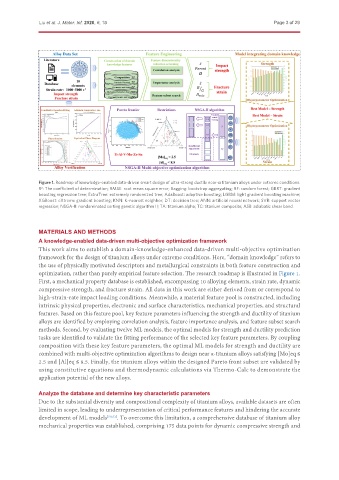
               Figure 1. Roadmap of knowledge-enabled data-driven smart design of ultra-strong ductile near-α titanium alloys under extreme conditions.
               R : The coefficient of determination; RMSE: root mean square error; Bagging: bootstrap aggregating; RF: random forest; GBRT: gradient
                2
               boosting regression tree; ExtraTree: extremely randomized tree; AdaBoost: adaptive boosting; LGBM: light gradient boosting machine;
               XGBoost: eXtreme gradient boosting; KNN: K-nearest neighbor; DT: decision tree; ANN: artificial neural network; SVR: support vector
               regression; NSGA-II: nondominated sorting genetic algorithm II; TA: titanium alpha; TC: titanium composite; ASB: adiabatic shear band.


               MATERIALS AND METHODS
               A knowledge-enabled data-driven multi-objective optimization framework
               This work aims to establish a domain-knowledge-enhanced data-driven multi-objective optimization
               framework for the design of titanium alloys under extreme conditions. Here, “domain knowledge” refers to
               the use of physically motivated descriptors and metallurgical constraints in both feature construction and
               optimization, rather than purely empirical feature selection. The research roadmap is illustrated in Figure 1.
               First, a mechanical property database is established, encompassing 10 alloying elements, strain rate, dynamic
               compressive strength, and fracture strain. All data in this work are either derived from or correspond to
               high-strain-rate impact loading conditions. Meanwhile, a material feature pool is constructed, including
               intrinsic physical properties, electronic and surface characteristics, mechanical properties, and structural
               features. Based on this feature pool, key feature parameters influencing the strength and ductility of titanium
               alloys are identified by employing correlation analysis, feature importance analysis, and feature subset search
               methods. Second, by evaluating twelve ML models, the optimal models for strength and ductility prediction
               tasks are identified to validate the fitting performance of the selected key feature parameters. By coupling
               composition with these key feature parameters, the optimal ML models for strength and ductility are
               combined with multi-objective optimization algorithms to design near α-titanium alloys satisfying [Mo]eq ≤
               2.5 and [Al]eq ≤ 8.5. Finally, the titanium alloys within the designed Pareto front subset are validated by
               using constitutive equations and thermodynamic calculations via Thermo-Calc to demonstrate the
               application potential of the new alloys.


               Analyze the database and determine key characteristic parameters
               Due to the substantial diversity and compositional complexity of titanium alloys, available datasets are often
               limited in scope, leading to underrepresentation of critical performance features and hindering the accurate
               development of ML models [50,51] . To overcome this limitation, a comprehensive database of titanium alloy
               mechanical properties was established, comprising 175 data points for dynamic compressive strength and

