


Page 47 - Read Online
P. 47
Page 6 of 18                         Li et al. J. Mater. Inf. 2025, 5, 29  https://dx.doi.org/10.20517/jmi.2024.103

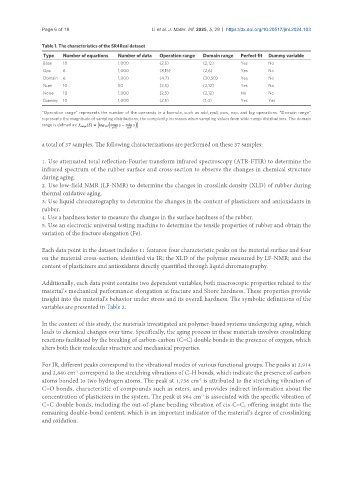
               Table 1. The characteristics of the SR4Real dataset
                Type  Number of equations  Number of data  Operation range  Domain range  Perfect fit  Dummy variable
                Base  10                 1,000         (2,5)         (2,12)       Yes       No
                Ops   6                  1,000         (8,15)        (2,6)        Yes       No
                Domain  6                1,000         (4,7)         (30,50)      Yes       No
                Num   10                 50            (2,5)         (2,12)       Yes       No
                Noise  10                1,000         (2,5)         (2,12)       No        No
                Dummy  10                1,000         (2,5)         (1,4)        Yes       Yes
               “Operation range” represents the number of the operands in a formula, such as add, mul, pow, exp, and log operations. “Domain range”
               represents the magnitude of sampling distributions; the complexity increases when sampling values from wide-range distributions. The domain
               range is defined as: f  (S) = |log10(max S - min S)|.
                            range

               a total of 37 samples. The following characterizations are performed on these 37 samples:

               1. Use attenuated total reflection-Fourier transform infrared spectroscopy (ATR-FTIR) to determine the
               infrared spectrum of the rubber surface and cross-section to observe the changes in chemical structure
               during aging.
               2. Use low-field NMR (LF-NMR) to determine the changes in crosslink density (XLD) of rubber during
               thermal oxidative aging.
               3. Use liquid chromatography to determine the changes in the content of plasticizers and antioxidants in
               rubber.
               4. Use a hardness tester to measure the changes in the surface hardness of the rubber.
               5. Use an electronic universal testing machine to determine the tensile properties of rubber and obtain the
               variation of the fracture elongation (Fe).


               Each data point in the dataset includes 11 features: four characteristic peaks on the material surface and four
               on the material cross-section, identified via IR; the XLD of the polymer measured by LF-NMR; and the
               content of plasticizers and antioxidants directly quantified through liquid chromatography.


               Additionally, each data point contains two dependent variables, both macroscopic properties related to the
               material’s mechanical performance: elongation at fracture and Shore hardness. These properties provide
               insight into the material’s behavior under stress and its overall hardness. The symbolic definitions of the
               variables are presented in Table 2.

               In the context of this study, the materials investigated are polymer-based systems undergoing aging, which
               leads to chemical changes over time. Specifically, the aging process in these materials involves crosslinking
               reactions facilitated by the breaking of carbon-carbon (C=C) double bonds in the presence of oxygen, which
               alters both their molecular structure and mechanical properties.


               For IR, different peaks correspond to the vibrational modes of various functional groups. The peaks at 2,914
                          -1
               and 2,840 cm  correspond to the stretching vibrations of C–H bonds, which indicate the presence of carbon
               atoms bonded to two hydrogen atoms. The peak at 1,736 cm  is attributed to the stretching vibration of
                                                                    -1
               C=O bonds, characteristic of compounds such as esters, and provides indirect information about the
                                                                     -1
               concentration of plasticizers in the system. The peak at 964 cm  is associated with the specific vibration of
               C=C double bonds, including the out-of-plane bending vibration of cis-C=C, offering insight into the
               remaining double-bond content, which is an important indicator of the material’s degree of crosslinking
               and oxidation.

