


Page 20 - Read Online
P. 20
Liu et al. J Mater Inf 2024;4:33  https://dx.doi.org/10.20517/jmi.2024.48       Page 13 of 33


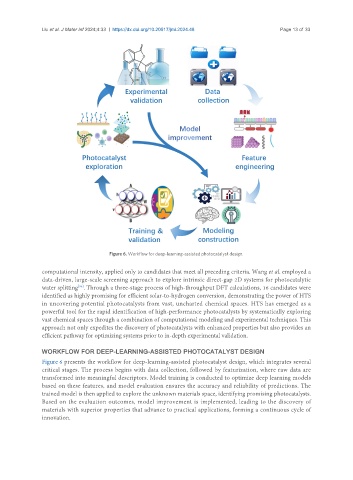
                                      Figure 6. Workflow for deep-learning-assisted photocatalyst design.

               computational intensity, applied only to candidates that meet all preceding criteria. Wang et al. employed a
               data-driven, large-scale screening approach to explore intrinsic direct-gap 2D systems for photocatalytic
                           [96]
               water splitting . Through a three-stage process of high-throughput DFT calculations, 16 candidates were
               identified as highly promising for efficient solar-to-hydrogen conversion, demonstrating the power of HTS
               in uncovering potential photocatalysts from vast, uncharted chemical spaces. HTS has emerged as a
               powerful tool for the rapid identification of high-performance photocatalysts by systematically exploring
               vast chemical spaces through a combination of computational modeling and experimental techniques. This
               approach not only expedites the discovery of photocatalysts with enhanced properties but also provides an
               efficient pathway for optimizing systems prior to in-depth experimental validation.


               WORKFLOW FOR DEEP-LEARNING-ASSISTED PHOTOCATALYST DESIGN
               Figure 6 presents the workflow for deep-learning-assisted photocatalyst design, which integrates several
               critical stages. The process begins with data collection, followed by featurization, where raw data are
               transformed into meaningful descriptors. Model training is conducted to optimize deep learning models
               based on these features, and model evaluation ensures the accuracy and reliability of predictions. The
               trained model is then applied to explore the unknown materials space, identifying promising photocatalysts.
               Based on the evaluation outcomes, model improvement is implemented, leading to the discovery of
               materials with superior properties that advance to practical applications, forming a continuous cycle of
               innovation.

