


Page 131 - Read Online
P. 131
Page 8 of 21           Chen et al. Energy Mater. 2025, 5, 500120  https://dx.doi.org/10.20517/energymater.2024.311


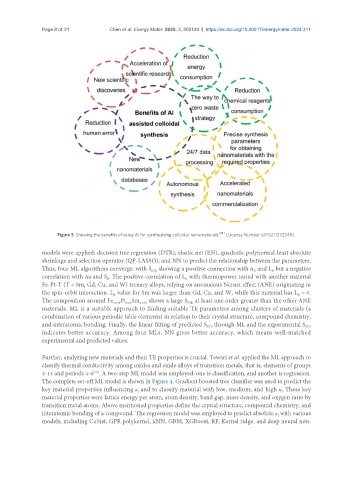
                    Figure 3. Showing the benefits of using AI for synthesizing colloidal nanomaterials [48] . (License Number 6015211273249).

               models were applied: decision tree regression (DTR), elastic net (EN), quadratic polynomial-least absolute
               shrinkage and selection operator (QP-LASSO), and NN to predict the relationship between the parameters.
               Thus, four ML algorithms converge, with S  showing a positive connection with n  and L  but a negative
                                                    STE
                                                                                             R
                                                                                       R
               correlation with Δa and S . The positive correlation of L  with thermopower tested with another material
                                     R
                                                               R
               Fe-Pt-T (T = Sm, Gd, Cu, and W) ternary alloys, relying on anomalous Nernst effect (ANE) originating in
               the spin-orbit interaction. L  value for Sm was larger than Gd, Cu, and W, while this material has L  = 0.
                                       R
                                                                                                     R
               The composition around Fe Pt Sm  shows a large S  at least one order greater than the other ANE
                                       0.665
                                                0.065
                                           0.27
                                                                STE
               materials. ML is a suitable approach to finding suitable TE parameters among clusters of materials (a
               combination of various periodic table elements) in relation to their crystal structure, compound chemistry,
               and interatomic bonding. Finally, the linear fitting of predicted S  through ML and the experimental S
                                                                                                        STE
                                                                       STE
               indicates better accuracy. Among four MLs, NN gives better accuracy, which means well-matched
               experimental and predicted values.
               Further, analyzing new materials and their TE properties is crucial. Tewari et al. applied the ML approach to
               classify thermal conductivity among oxides and oxide alloys of transition metals, that is, elements of groups
               3-11 and periods 4-6 . A two-step ML model was employed: one is classification, and another is regression.
                                [50]
               The complete set-off ML model is shown in Figure 4. Gradient boosted tree classifier was used to predict the
               key material properties influencing κ and to classify material with low, medium, and high κ. These key
                                                                                                l
                                                l
               material properties were lattice energy per atom, atom density, band gap, mass density, and oxygen ratio by
               transition metal atoms. Above mentioned properties define the crystal structure, compound chemistry, and
               interatomic bonding of a compound. The regression model was employed to predict absolute κ with various
                                                                                               l
               models, including Cubist, GPR polykernel, kNN, GBM, XGBoost, RF, Kernel ridge, and deep neural nets.

