


Page 127 - Read Online
P. 127
Page 4 of 21           Chen et al. Energy Mater. 2025, 5, 500120  https://dx.doi.org/10.20517/energymater.2024.311


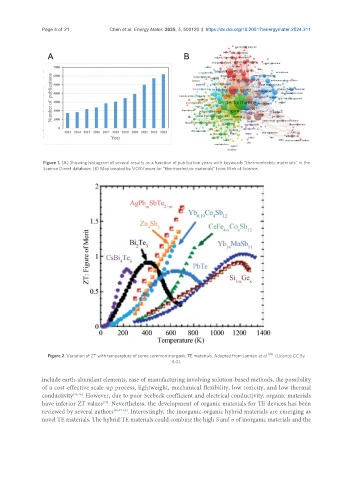
                Figure 1. (A) Showing histogram of several results as a function of publication years with keywords “thermoelectric materials” in the
                Science Direct database. (B) Map created by VOSViewer for “thermoelectric materials” from Web of Science.


                                                                                           [22]
                 Figure 2. Variation of ZT with temperature of some common inorganic TE materials. Adapted from Jarman et al.  . (Licence CC By
                                                           4.0).

               include earth-abundant elements, ease of manufacturing involving solution-based methods, the possibility
               of a cost-effective scale-up process, lightweight, mechanical flexibility, low toxicity, and low thermal
               conductivity [25,26] . However, due to poor Seebeck coefficient and electrical conductivity, organic materials
                                    [27]
               have inferior ZT values . Nevertheless, the development of organic materials for TE devices has been
               reviewed by several authors [25,27-29] . Interestingly, the inorganic-organic hybrid materials are emerging as
               novel TE materials. The hybrid TE materials could combine the high S and σ of inorganic materials and the

