


Page 22 - Read Online
P. 22
Page 4 of 31              Miao et al. Energy Mater 2023;3:300014  https://dx.doi.org/10.20517/energymater.2022.89


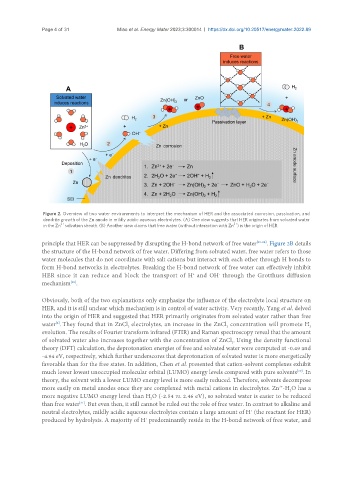
                Figure 2. Overview of two water environments to interpret the mechanism of HER and the associated corrosion, passivation, and
                dendrite growth of the Zn anode in mildly acidic aqueous electrolytes. (A) One view suggests that HER originates from solvated water
                     2+                                                         2+
                in the Zn  solvation sheath. (B) Another view claims that free water (without interaction with Zn ) is the origin of HER.
               principle that HER can be suppressed by disrupting the H-bond network of free water [25-28] . Figure 2B details
               the structure of the H-bond network of free water. Differing from solvated water, free water refers to those
               water molecules that do not coordinate with salt cations but interact with each other through H bonds to
               form H-bond networks in electrolytes. Breaking the H-bond network of free water can effectively inhibit
                                                                  +
               HER since it can reduce and block the transport of H  and OH  through the Grotthuss diffusion
                                                                           -
               mechanism .
                         [29]
               Obviously, both of the two explanations only emphasize the influence of the electrolyte local structure on
               HER, and it is still unclear which mechanism is in control of water activity. Very recently, Yang et al. delved
               into the origin of HER and suggested that HER primarily originates from solvated water rather than free
               water . They found that in ZnCl  electrolytes, an increase in the ZnCl  concentration will promote H
                    [4]
                                                                                                         2
                                            2
                                                                             2
               evolution. The results of Fourier transform infrared (FTIR) and Raman spectroscopy reveal that the amount
               of solvated water also increases together with the concentration of ZnCl . Using the density functional
                                                                               2
               theory (DFT) calculation, the deprotonation energies of free and solvated water were computed at -0.49 and
               -4.94 eV, respectively, which further underscores that deprotonation of solvated water is more energetically
               favorable than for the free states. In addition, Chen et al. presented that cation-solvent complexes exhibit
                                                                                                     [30]
               much lower lowest unoccupied molecular orbital (LUMO) energy levels compared with pure solvents . In
               theory, the solvent with a lower LUMO energy level is more easily reduced. Therefore, solvents decompose
               more easily on metal anodes once they are complexed with metal cations in electrolytes. Zn -H O has a
                                                                                               2+
                                                                                                   2
               more negative LUMO energy level than H O (-2.54 vs. 2.46 eV), so solvated water is easier to be reduced
                                                    2
                            [31]
               than free water . But even then, it still cannot be ruled out the role of free water. In contrast to alkaline and
               neutral electrolytes, mildly acidic aqueous electrolytes contain a large amount of H  (the reactant for HER)
                                                                                      +
               produced by hydrolysis. A majority of H  predominantly reside in the H-bond network of free water, and
                                                  +

