


Page 192 - Read Online
P. 192
Yang et al. Energy Mater 2024;4:400061  https://dx.doi.org/10.20517/energymater.2023.144  Page 3 of 23


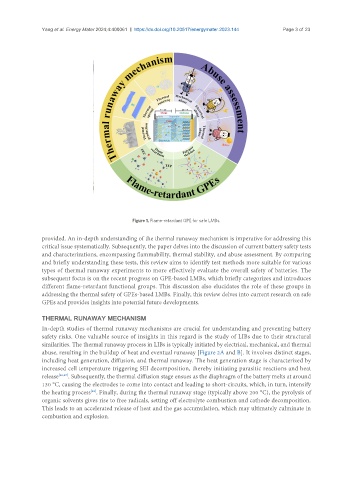
                                              Figure 1. Flame-retardant GPE for safe LMBs.

               provided. An in-depth understanding of the thermal runaway mechanism is imperative for addressing this
               critical issue systematically. Subsequently, the paper delves into the discussion of current battery safety tests
               and characterizations, encompassing flammability, thermal stability, and abuse assessment. By comparing
               and briefly understanding these tests, this review aims to identify test methods more suitable for various
               types of thermal runaway experiments to more effectively evaluate the overall safety of batteries. The
               subsequent focus is on the recent progress on GPE-based LMBs, which briefly categorizes and introduces
               different flame-retardant functional groups. This discussion also elucidates the role of these groups in
               addressing the thermal safety of GPEs-based LMBs. Finally, this review delves into current research on safe
               GPEs and provides insights into potential future developments.

               THERMAL RUNAWAY MECHANISM
               In-depth studies of thermal runaway mechanisms are crucial for understanding and preventing battery
               safety risks. One valuable source of insights in this regard is the study of LIBs due to their structural
               similarities. The thermal runaway process in LIBs is typically initiated by electrical, mechanical, and thermal
               abuse, resulting in the buildup of heat and eventual runaway [Figure 2A and B]. It involves distinct stages,
               including heat generation, diffusion, and thermal runaway. The heat generation stage is characterized by
               increased cell temperature triggering SEI decomposition, thereby initiating parasitic reactions and heat
               release [46,47] . Subsequently, the thermal diffusion stage ensues as the diaphragm of the battery melts at around
               130 °C, causing the electrodes to come into contact and leading to short-circuits, which, in turn, intensify
                                [48]
               the heating process . Finally, during the thermal runaway stage (typically above 200 °C), the pyrolysis of
               organic solvents gives rise to free radicals, setting off electrolyte combustion and cathode decomposition.
               This leads to an accelerated release of heat and the gas accumulation, which may ultimately culminate in
               combustion and explosion.

