


Page 88 - Read Online
P. 88
Song et al. Energy Mater. 2026, 6, 600019                                         Page 3 of 22


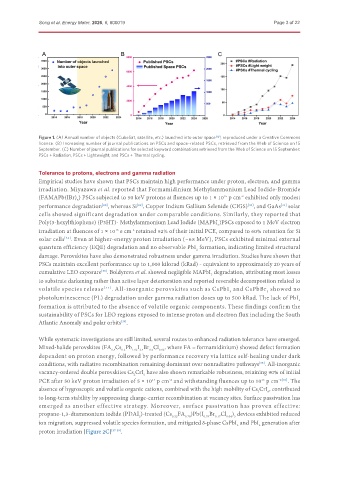
               Figure 1. (A) Annual number of objects (CubeSat, satellite, etc.) launched into outer space [10] , reproduced under a Creative Commons
               license. (B) Increasing number of journal publications on PSCs and space-related PSCs, retrieved from the Web of Science on 15
               September. (C) Number of journal publications for selected keyword combinations retrieved from the Web of Science on 15 September:
               PSCs + Radiation, PSCs + Lightweight, and PSCs + Thermal cycling.


               Tolerance to protons, electrons and gamma radiation
               Empirical studies have shown that PSCs maintain high performance under proton, electron, and gamma
               irradiation. Miyazawa et al. reported that Formamidinium Methylammonium Lead Iodide-Bromide
               (FAMAPb(IBr) ) PSCs subjected to 50 keV protons at fluences up to 1 × 10  p cm  exhibited only modest
                                                                                      -2
                                                                                15
                            3
               performance degradation , whereas Si , Copper Indium Gallium Selenide (CIGS) , and GaAs  solar
                                     [28]
                                                                                        [30]
                                                 [29]
                                                                                                    [31]
               cells showed significant degradation under comparable conditions. Similarly, they reported that
               Poly(3-hexylthiophene) (P3HT)- Methylammonium Lead Iodide (MAPbI )PSCs exposed to 1 MeV electron
                                                                             3
               irradiation at fluences of 1 × 10  e cm  retained 92% of their initial PCE, compared to 60% retention for Si
                                               -2
                                          16
               solar cells . Even at higher-energy proton irradiation (~68 MeV), PSCs exhibited minimal external
                        [32]
               quantum efficiency (EQE) degradation and no observable PbI  formation, indicating limited structural
                                                                      2
               damage. Perovskites have also demonstrated robustness under gamma irradiation. Studies have shown that
               PSCs maintain excellent performance up to 1,000 kilorad (kRad) - equivalent to approximately 20 years of
               cumulative LEO exposure . Boldyreva et al. showed negligible MAPbI  degradation, attributing most losses
                                     [33]
                                                                           3
               to substrate darkening rather than active layer deterioration and reported reversible decomposition related to
               volatile species release [33] . All-inorganic perovskites such as CsPbI  and CsPbBr  showed no
                                                                                               3
                                                                                  3
               photoluminescence (PL) degradation under gamma radiation doses up to 500 kRad. The lack of PbI 2
               formation is attributed to the absence of volatile organic components. These findings confirm the
               sustainability of PSCs for LEO regions exposed to intense proton and electron flux including the South
               Atlantic Anomaly and polar orbits .
                                            [34]
               While systematic investigations are still limited, several routes to enhanced radiation tolerance have emerged.
               Mixed-halide perovskites (FA Cs Pb I Br Cl , where FA = formamidinium) showed defect formation
                                        0.8
                                                         0.02
                                                     0.6
                                            0.2
                                               1.02 2.4
               dependent on proton energy, followed by performance recovery via lattice self-healing under dark
               conditions, with radiative recombination remaining dominant over nonradiative pathways . All-inorganic
                                                                                            [35]
               vacancy-ordered double perovskites Cs CrI  have also shown remarkable robustness, retaining 90% of initial
                                                2
                                                   6
               PCE after 50 keV proton irradiation of 5 × 10  p cm  and withstanding fluences up to 10  p cm -2[36] . The
                                                                                             16
                                                      13
                                                            -2
               absence of hygroscopic and volatile organic cations, combined with the high mobility of Cs CrI , contributed
                                                                                            2
                                                                                               6
               to long-term stability by suppressing charge-carrier recombination at vacancy sites. Surface passivation has
               emerged as another effective strategy. Moreover, surface passivation has proven effective:
               propane-1,3-diammonium iodide (PDAI )-treated (Cs FA )Pb(I Br Cl )  devices exhibited reduced
                                                                         0.79
                                                  2
                                                             0.22
                                                                  0.78
                                                                             0.17
                                                                                0.04 3
               ion migration, suppressed volatile species formation, and mitigated δ-phase CsPbI  and PbI  generation after
                                                                                    3
                                                                                            2
               proton irradiation [Figure 2C] [37-39] .

