


Page 98 - Read Online
P. 98
Page 44 of 50                      Siddiqui et al. Chem Synth 2023;3:25  https://dx.doi.org/10.20517/cs.2023.02


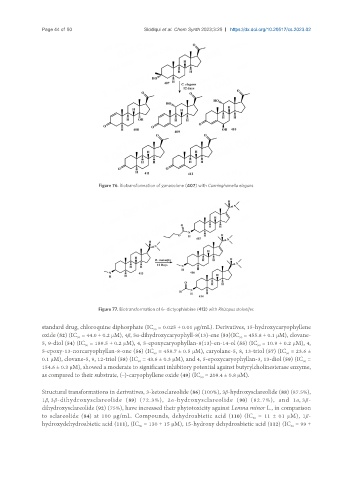
                                  Figure 76. Biotransformation of ganaxolone (407) with Cunninghamella elegans.


                                  Figure 77. Biotransformation of 6- dictyophlebine (413) with Rhizopus stolonifer.

               standard drug, chloroquine diphosphate (IC  = 0.025 ± 0.01 μg/mL). Derivatives, 15-hydroxycaryophyllene
                                                     50
               oxide (52) (IC  = 44.0 ± 0.2 μM), 4β, 5α-dihydroxycaryophyll-8(13)-ene (53)(IC  = 455.8 ± 0.1 μM), clovane-
                           50
                                                                                  50
               5, 9-diol (54) (IC  = 189.5 ± 0.2 μM), 4, 5-epoxycaryophyllan-8(13)-en-14-ol (55) (IC  = 10.9 ± 0.2 μM), 4,
                                                                                        50
                              50
               5-epoxy-13-norcaryophyllan-8-one (56) (IC  = 458.7 ± 0.5 μM), caryolane-5, 8, 13-triol (57) (IC  = 23.6 ±
                                                     50
                                                                                                 50
               0.1 μM), clovane-5, 9, 12-triol (58) (IC  = 43.6 ± 0.3 μM), and 4, 5-epoxycaryophyllan-3, 13-diol (59) (IC  =
                                               50
                                                                                                       50
               154.6 ± 0.3 μM), showed a moderate to significant inhibitory potential against butyrylcholinesterase enzyme,
               as compared to their substrate, (–)-caryophyllene oxide (49) (IC  = 208.4 ± 0.8 μM).
                                                                     50
               Structural transformations in derivatives, 3-ketosclareolide (86) (100%), 3β-hydroxysclareolide (88) (87.5%),
               1β, 3β-dihydroxysclareolide  (89)  (72.3%),  2α-hydroxysclareolide  (90)  (82.7%),  and  1α, 3β-
               dihydroxysclareolide (92) (75%), have increased their phytotoxicity against Lemna minor L., in comparison
               to sclareolide (84) at 100  μg/mL. Compounds, dehydroabietic acid (110) (IC  = 11  ± 01  μM), 1β-
                                                                                      50
               hydroxydehydroabietic acid (111), (IC  = 130 ± 15 μM), 15-hydroxy dehydroabietic acid (112) (IC  = 99 ±
                                                50
                                                                                                   50

