


Page 15 - Read online
P. 15
Maffia et al. Carbon Footprints 2026, 5, 7                                       Page 11 of 19


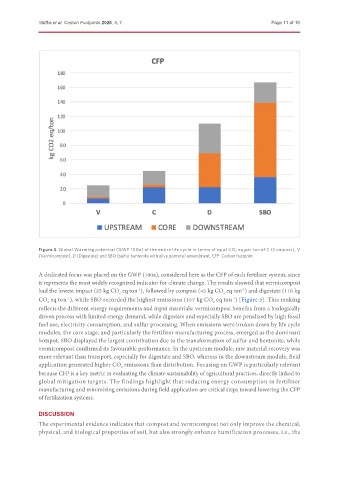
               Figure 3. Global Warming potential (GWP 100a) of the entire life cycle in terms of kg of CO 2  eq per ton of C (Compost), V
               (Vermicompost), D (Digestate) and SBO (sulfur bentonite with olive pomace) amendment. CFP: Carbon footprint.

               A dedicated focus was placed on the GWP (100a), considered here as the CFP of each fertilizer system, since
               it represents the most widely recognized indicator for climate change. The results showed that vermicompost
               had the lowest impact (25 kg CO  eq ton ), followed by compost (43 kg CO  eq ton ) and digestate (110 kg
                                                 -1
                                                                                      -1
                                           2
                                                                               2
               CO  eq ton ), while SBO recorded the highest emissions (167 kg CO  eq ton ) [Figure 3]. This ranking
                                                                                   -1
                        -1
                                                                            2
                  2
               reflects the different energy requirements and input materials: vermicompost benefits from a biologically
               driven process with limited energy demand, while digestate and especially SBO are penalized by high fossil
               fuel use, electricity consumption, and sulfur processing. When emissions were broken down by life cycle
               modules, the core stage, and particularly the fertilizer manufacturing process, emerged as the dominant
               hotspot. SBO displayed the largest contribution due to the transformation of sulfur and bentonite, while
               vermicompost confirmed its favourable performance. In the upstream module, raw material recovery was
               more relevant than transport, especially for digestate and SBO, whereas in the downstream module, field
               application generated higher CO  emissions than distribution. Focusing on GWP is particularly relevant
                                            2
               because CFP is a key metric in evaluating the climate sustainability of agricultural practices, directly linked to
               global mitigation targets. The findings highlight that reducing energy consumption in fertilizer
               manufacturing and minimizing emissions during field application are critical steps toward lowering the CFP
               of fertilization systems.


               DISCUSSION
               The experimental evidence indicates that compost and vermicompost not only improve the chemical,
               physical, and biological properties of soil, but also strongly enhance humification processes, i.e., the

