


Page 13 - Read online
P. 13
Maffia et al. Carbon Footprints 2026, 5, 7                                        Page 9 of 19


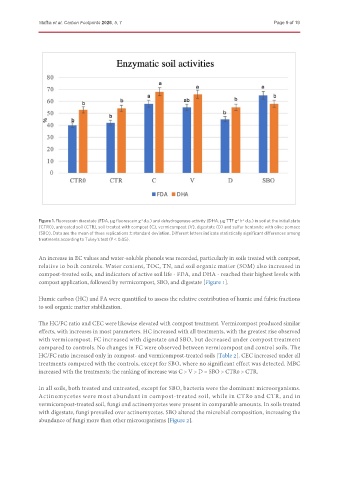
               Figure 1. Fluorescein diacetate (FDA, μg fluorescein g  d.s.) and dehydrogenase activity (DHA, μg TTF g  h  d.s.) in soil at the initial state
                                                                                      -1
                                                                                    -1
                                                  -1
               (CTR0), untreated soil (CTR), soil treated with compost (C), vermicompost (V), digestate (D) and sulfur bentonite with olive pomace
               (SBO). Data are the mean of three replications ± standard deviation. Different letters indicate statistically significant differences among
               treatments according to Tukey’s test (P < 0.05).
               An increase in EC values and water-soluble phenols was recorded, particularly in soils treated with compost,
               relative to both controls. Water content, TOC, TN, and soil organic matter (SOM) also increased in
               compost-treated soils, and indicators of active soil life - FDA, and DHA - reached their highest levels with
               compost application, followed by vermicompost, SBO, and digestate [Figure 1].

               Humic carbon (HC) and FA were quantified to assess the relative contribution of humic and fulvic fractions
               to soil organic matter stabilization.


               The HC/FC ratio and CEC were likewise elevated with compost treatment. Vermicompost produced similar
               effects, with increases in most parameters. HC increased with all treatments, with the greatest rise observed
               with vermicompost. FC increased with digestate and SBO, but decreased under compost treatment
               compared to controls. No changes in FC were observed between vermicompost and control soils. The
               HC/FC ratio increased only in compost- and vermicompost-treated soils [Table 2]. CEC increased under all
               treatments compared with the controls, except for SBO, where no significant effect was detected. MBC
               increased with the treatments; the ranking of increase was C > V > D = SBO > CTR0 > CTR.


               In all soils, both treated and untreated, except for SBO, bacteria were the dominant microorganisms.
               Actinomycetes were most abundant in compost-treated soil, while in CTR0 and CTR, and in
               vermicompost-treated soil, fungi and actinomycetes were present in comparable amounts. In soils treated
               with digestate, fungi prevailed over actinomycetes. SBO altered the microbial composition, increasing the
               abundance of fungi more than other microorganisms [Figure 2].

