


Page 19 - Read online
P. 19
Maffia et al. Carbon Footprints 2026, 5, 7                                       Page 15 of 19


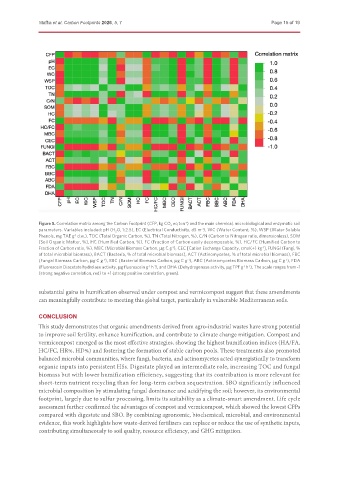
               Figure 5. Correlation matrix among the Carbon Footprint (CFP, kg CO 2  eq ton ) and the main chemical, microbiological and enzymatic soil
                                                                  -1
               parameters. Variables included: pH (H 2 O, 1:2.5), EC (Electrical Conductivity, dS m ), WC (Water Content, %), WSP (Water Soluble
                                                                        -1
               Phenols, mg TAE g  d.w.), TOC (Total Organic Carbon, %), TN (Total Nitrogen, %), C/N (Carbon to Nitrogen ratio, dimensionless), SOM
                           -1
               (Soil Organic Matter, %), HC (Humified Carbon, %), FC (Fraction of Carbon easily decomposable, %), HC/FC (Humified Carbon to
               Fraction of Carbon ratio, %), MBC (Microbial Biomass Carbon, µg C g ), CEC [Cation Exchange Capacity, cmol(+) kg ], FUNGI (Fungi, %
                                                             -1
                                                                                             -1
               of total microbial biomass), BACT (Bacteria, % of total microbial biomass), ACT (Actinomycetes, % of total microbial biomass), FBC
               (Fungal Biomass Carbon, µg C g ), BBC (Bacterial Biomass Carbon, µg C g ), ABC (Actinomycetes Biomass Carbon, µg C g ), FDA
                                                                                                     -1
                                     -1
                                                                   -1
               (Fluorescein Diacetate hydrolase activity, µg fluorescein g  h ), and DHA (Dehydrogenase activity, µg TPF g  h ). The scale ranges from -1
                                                                                      -1
                                                                                        -1
                                                       -1
                                                     -1
               (strong negative correlation, red) to +1 (strong positive correlation, green).
               substantial gains in humification observed under compost and vermicompost suggest that these amendments
               can meaningfully contribute to meeting this global target, particularly in vulnerable Mediterranean soils.
               CONCLUSION
               This study demonstrates that organic amendments derived from agro-industrial wastes have strong potential
               to improve soil fertility, enhance humification, and contribute to climate change mitigation. Compost and
               vermicompost emerged as the most effective strategies, showing the highest humification indices (HA/FA,
               HC/FC, HR%, HD%) and fostering the formation of stable carbon pools. These treatments also promoted
               balanced microbial communities, where fungi, bacteria, and actinomycetes acted synergistically to transform
               organic inputs into persistent HSs. Digestate played an intermediate role, increasing TOC and fungal
               biomass but with lower humification efficiency, suggesting that its contribution is more relevant for
               short-term nutrient recycling than for long-term carbon sequestration. SBO significantly influenced
               microbial composition by stimulating fungal dominance and acidifying the soil; however, its environmental
               footprint, largely due to sulfur processing, limits its suitability as a climate-smart amendment. Life cycle
               assessment further confirmed the advantages of compost and vermicompost, which showed the lowest CFPs
               compared with digestate and SBO. By combining agronomic, biochemical, microbial, and environmental
               evidence, this work highlights how waste-derived fertilizers can replace or reduce the use of synthetic inputs,
               contributing simultaneously to soil quality, resource efficiency, and GHG mitigation.

