


Page 46 - Read Online
P. 46
Page 4 of 16                    Watts et al. Carbon Footprints 2025, 4, 27  https://dx.doi.org/10.20517/cf.2025.20


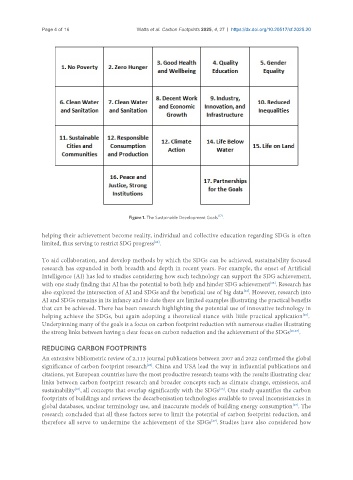
                                            Figure 1. The Sustainable Development Goals [17] .


               helping their achievement become reality, individual and collective education regarding SDGs is often
               limited, thus serving to restrict SDG progress .
                                                     [22]

               To aid collaboration, and develop methods by which the SDGs can be achieved, sustainability focused
               research has expanded in both breadth and depth in recent years. For example, the onset of Artificial
               Intelligence (AI) has led to studies considering how such technology can support the SDG achievement,
               with one study finding that AI has the potential to both help and hinder SDG achievement . Research has
                                                                                            [23]
               also explored the intersection of AI and SDGs and the beneficial use of big data . However, research into
                                                                                   [24]
               AI and SDGs remains in its infancy and to date there are limited examples illustrating the practical benefits
               that can be achieved. There has been research highlighting the potential use of innovative technology in
                                                                                                       [25]
               helping achieve the SDGs, but again adopting a theoretical stance with little practical application .
               Underpinning many of the goals is a focus on carbon footprint reduction with numerous studies illustrating
               the strong links between having a clear focus on carbon reduction and the achievement of the SDGs [26,27] .


               REDUCING CARBON FOOTPRINTS
               An extensive bibliometric review of 2,113 journal publications between 2007 and 2022 confirmed the global
               significance of carbon footprint research . China and USA lead the way in influential publications and
                                                   [28]
               citations, yet European countries have the most productive research teams with the results illustrating clear
               links between carbon footprint research and broader concepts such as climate change, emissions, and
               sustainability , all concepts that overlap significantly with the SDGs . One study quantifies the carbon
                          [28]
                                                                           [26]
               footprints of buildings and reviews the decarbonisation technologies available to reveal inconsistencies in
               global databases, unclear terminology use, and inaccurate models of building energy consumption . The
                                                                                                    [27]
               research concluded that all these factors serve to limit the potential of carbon footprint reduction, and
               therefore all serve to undermine the achievement of the SDGs . Studies have also considered how
                                                                        [27]

