


Page 48 - Read Online
P. 48
Page 6 of 16                    Watts et al. Carbon Footprints 2025, 4, 27  https://dx.doi.org/10.20517/cf.2025.20


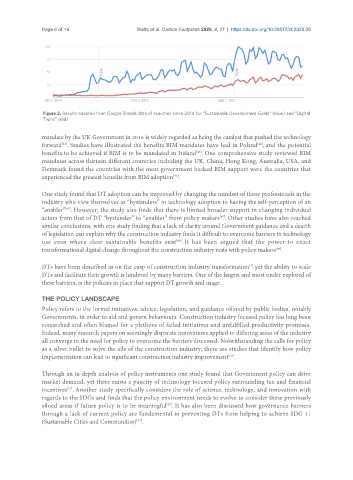
                Figure 2. Results adapted from Google Trends data of searches since 2014 for “Sustainable Development Goals” (blue) and “Digital
                Twins” (red).

               mandate by the UK Government in 2016 is widely regarded as being the catalyst that pushed the technology
                                                                                        [44]
               forward . Studies have illustrated the benefits BIM mandates have had in Poland , and the potential
                      [43]
               benefits to be achieved if BIM is to be mandated in Ireland . One comprehensive study reviewed BIM
                                                                   [45]
               mandates across thirteen different countries including the UK, China, Hong Kong, Australia, USA, and
               Denmark found the countries with the most government backed BIM support were the countries that
               experienced the greatest benefits from BIM adoption .
                                                           [46]
               One study found that DT adoption can be improved by changing the mindset of those professionals in the
               industry who view themselves as “bystanders” in technology adoption to having the self-perception of an
               “enabler” . However, the study also finds that there is limited broader support in changing individual
                       [47]
               actors from that of DT “bystander” to “enabler” from policy makers . Other studies have also reached
                                                                           [47]
               similar conclusions, with one study finding that a lack of clarity around Government guidance and a dearth
               of legislation can explain why the construction industry finds it difficult to overcome barriers in technology
                                                            [48]
               use  even  where  clear  sustainable  benefits  exist . It  has  been  argued  that  the  power  to  enact
               transformational digital change throughout the construction industry rests with policy makers .
                                                                                              [49]
               DTs have been described as on the cusp of construction industry transformation  yet the ability to scale
                                                                                     [1]
               DTs and facilitate their growth is hindered by many barriers. One of the largest and most under explored of
               these barriers, is the policies in place that support DT growth and usage.

               THE POLICY LANDSCAPE
               Policy refers to the formal initiatives, advice, legislation, and guidance offered by public bodies, notably
               Governments, in order to aid and govern behaviours. Construction industry focused policy has long been
               researched and often blamed for a plethora of failed initiatives and unfulfilled productivity promises.
               Indeed, many research papers on seemingly disparate innovations applied to differing areas of the industry
               all converge in the need for policy to overcome the barriers discussed. Notwithstanding the calls for policy
               as a silver bullet to solve the ails of the construction industry, there are studies that identify how policy
                                                                              [50]
               implementation can lead to significant construction industry improvement .

               Through an in depth analysis of policy instruments one study found that Government policy can drive
               market demand, yet there exists a paucity of technology focused policy surrounding tax and financial
               incentives . Another study specifically considers the role of science, technology, and innovation with
                        [51]
               regards to the SDGs and finds that the policy environment needs to evolve to consider these previously
               siloed areas if future policy is to be meaningful . It has also been discussed how governance barriers
                                                         [52]
               through a lack of current policy are fundamental in preventing DTs from helping to achieve SDG 11
               (Sustainable Cities and Communities) .
                                               [53]

