


Page 130 - Read Online
P. 130
Page 10 of 13                                                Fang et al. Cancer Drug Resist. 2025;8:42


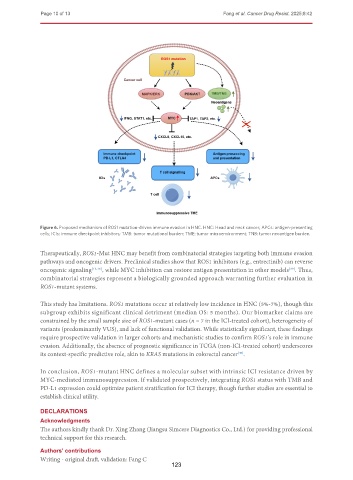
               Figure 6. Proposed mechanism of ROS1 mutation-driven immune evasion in HNC. HNC: Head and neck cancer; APCs: antigen-presenting
               cells; ICIs: immune checkpoint inhibitors; TMB: tumor mutational burden; TME: tumor microenvironment; TNB: tumor neoantigen burden.

               Therapeutically, ROS1-Mut HNC may benefit from combinatorial strategies targeting both immune evasion
               pathways and oncogenic drivers. Preclinical studies show that ROS1 inhibitors (e.g., entrectinib) can reverse
               oncogenic signaling [13,26] , while MYC inhibition can restore antigen presentation in other models . Thus,
                                                                                                   [39]
               combinatorial strategies represent a biologically grounded approach warranting further evaluation in
               ROS1-mutant systems.


               This study has limitations. ROS1 mutations occur at relatively low incidence in HNC (5%-7%), though this
               subgroup exhibits significant clinical detriment (median OS: 5 months). Our biomarker claims are
               constrained by the small sample size of ROS1-mutant cases (n = 7 in the ICI-treated cohort), heterogeneity of
               variants (predominantly VUS), and lack of functional validation. While statistically significant, these findings
               require prospective validation in larger cohorts and mechanistic studies to confirm ROS1’s role in immune
               evasion. Additionally, the absence of prognostic significance in TCGA (non-ICI-treated cohort) underscores
               its context-specific predictive role, akin to KRAS mutations in colorectal cancer .
                                                                                 [40]
               In conclusion, ROS1-mutant HNC defines a molecular subset with intrinsic ICI resistance driven by
               MYC-mediated immunosuppression. If validated prospectively, integrating ROS1 status with TMB and
               PD-L1 expression could optimize patient stratification for ICI therapy, though further studies are essential to
               establish clinical utility.


               DECLARATIONS
               Acknowledgments
               The authors kindly thank Dr. Xing Zhang (Jiangsu Simcere Diagnostics Co., Ltd.) for providing professional
               technical support for this research.

               Authors’ contributions
               Writing - original draft, validation: Fang C
                                                           123

