


Page 15 - Read Online
P. 15
Landau et al. Art Int Surg. 2025;5:24-35  https://dx.doi.org/10.20517/ais.2024.78     Page 30

               Table 2. Reported accuracy and efficiency of CPT code assignment
                AI method(s) employed (ML/NLP)  Specificity       Sensitivity           ROC values Accuracy
                Bing AI [13,15]              33.3% (endovascular)  46.7% (simple), 20% (complex) N/A  40%
                        [13,15]
                ChatGPT 4.0                  20% (simple), 40% (complex) 33.3% (simple), 40% (complex) N/A  25%
                        [13,15]
                ChatGPT 3.5                  26.7% (simple), 0% (complex) 20% (simple), 60% (complex)  N/A  20%
                 [13,16]
                RF                           74%-92%              74%-82%               N/A      74%-84%
                  [16]
                NN                           N/A                  N/A                   N/A      39%-54%
                SVM [10]                     0.918-1.00           0.594-0.897           0.422-0.967 0.650-0.884
                 [10,16]
                LR                           0.937-0.955          0.594-0.873           0.445-0.983 0.644-0.965
                NB [10]                      0.571-0.981          0.594-0.806           0.513-0.981  0.636-0.973
                  [18,21]
                GBT                          92%-93%              65%-67%               0.89-0.90  N/A
                DT [14]                      0.940-0.971          0.594-0.970           0.441-0.984 0.636-0.973
                      [14]
                RF + CWR                     Improved by 8%       Improved by 8%        N/A      82%-84%
                Text mining (ICD-9-CM, CPT codes) [10,13,18,19]  93%-100%  40%-100%     0.76-0.99  0.98
                    [13,15]
                TF-IDF                       74%-100%             74%-100%              N/A      74%-76%
                    [20]
                BiLSTM                       80%                  80%                   80%      98%
               CPT: Current procedural terminology; AI: artificial intelligence; ML: machine learning; NLP: natural language processing; ROC: receiver operating
               curve; RF: random forest; NN: neural network; SVM: support vector machine; LR: logistic regression; NB: Naïve Bayes; GBT: gradient boosted
               trees; DT: decision tree; CWR: class weight recalculation; ICD-9-CM: International Classification of Diseases, Ninth Revision, Clinical
               Modification, TF-IDF: term frequency-inverse document frequency; BiLSTM: bidirectional long short-term memory.


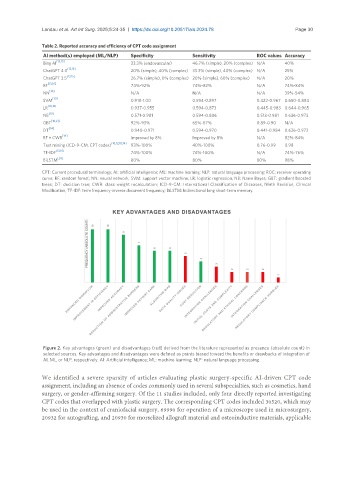
                Figure 2. Key advantages (green) and disadvantages (red) derived from the literature represented as presence (absolute count) in
                selected sources. Key advantages and disadvantages were defined as points biased toward the benefits or drawbacks of integration of
                AI, ML, or NLP, respectively. AI: Artificial intelligence; ML: machine learning; NLP: natural language processing.


               We identified a severe sparsity of articles evaluating plastic surgery-specific AI-driven CPT code
               assignment, including an absence of codes commonly used in several subspecialties, such as cosmetics, hand
               surgery, or gender-affirming surgery. Of the 11 studies included, only four directly reported investigating
               CPT codes that overlapped with plastic surgery. The corresponding CPT codes included 30520, which may
               be used in the context of craniofacial surgery, 69990 for operation of a microscope used in microsurgery,
               20932 for autografting, and 20930 for morselized allograft material and osteoinductive materials, applicable

