


Page 12 - Read Online
P. 12
Landau et al. Art Int Surg. 2025;5:24-35  https://dx.doi.org/10.20517/ais.2024.78     Page 28


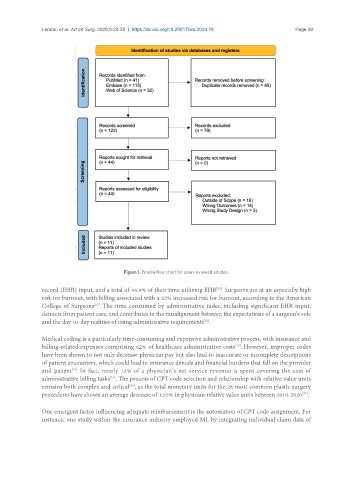
                                           Figure 1. Prisma flow chart for peer-reviewed articles.

               record (EHR) input, and a total of 44.9% of their time utilizing EHR . Surgeons are at an especially high
                                                                          [25]
               risk for burnout, with billing associated with a 32% increased risk for burnout, according to the American
               College of Surgeons . The time consumed by administrative tasks, including significant EHR input,
                                 [23]
               detracts from patient care, and contributes to the misalignment between the expectations of a surgeon’s role
               and the day-to-day realities of rising administrative requirements .
                                                                      [22]
               Medical coding is a particularly time-consuming and expensive administrative process, with insurance and
                                                                                [12]
               billing-related expenses comprising 62% of healthcare administrative costs . However, improper codes
               have been shown to not only decrease physician pay but also lead to inaccurate or incomplete descriptions
               of patient encounters, which could lead to insurance denials and financial burdens that fall on the provider
               and patient . In fact, nearly 12% of a physician’s net service revenue is spent covering the cost of
                         [11]
                                      [11]
               administrative billing tasks . The process of CPT code selection and relationship with relative value units
               remains both complex and critical , as the total monetary units for the 26 most common plastic surgery
                                             [26]
               procedures have shown an average decrease of 1.55% in physician relative value units between 2010-2020 .
                                                                                                       [27]
               One emergent factor influencing adequate reimbursement is the automation of CPT code assignment. For
               instance, one study within the insurance industry employed ML by integrating individual claim data of

