


Page 44 - Read Online
P. 44
Page 10 of 30                 Raffetto et al. Vessel Plus 2021;5:36  https://dx.doi.org/10.20517/2574-1209.2021.16


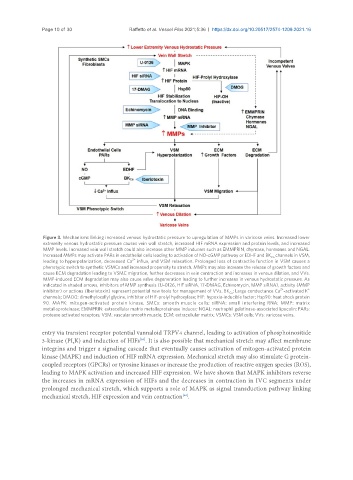
                Figure 3. Mechanisms linking increased venous hydrostatic pressure to upregulation of MMPs in varicose veins. Increased lower
                extremity venous hydrostatic pressure causes vein wall stretch, increased HIF mRNA expression and protein levels, and increased
                MMP levels. Increased vein wall stretch could also increase other MMP inducers such as EMMPRIN, chymase, hormones and NGAL.
                Increased MMPs may activate PARs in endothelial cells leading to activation of NO-cGMP pathway or EDHF and BK  channels in VSM,
                                                                                            Ca
                                              2+
                leading to hyperpolarization, decreased Ca  influx, and VSM relaxation. Prolonged loss of contractile function in VSM causes a
                phenotypic switch to synthetic VSMCs and increased propensity to stretch. MMPs may also increase the release of growth factors and
                cause ECM degradation leading to VSMC migration, further decreases in vein contraction and increases in venous dilation, and VVs.
                MMP-induced ECM degradation may also cause valve degeneration leading to further increases in venous hydrostatic pressure. As
                indicated in shaded arrows, inhibitors of MMP synthesis (U-0126, HIF siRNA, 17-DMAG, Echinomycin, MMP siRNA), activity (MMP
                                                                                               2+        +
                inhibitor) or actions (Iberiotoxin) represent potential new tools for management of VVs. BK : Large conductance Ca -activated K
                                                                              Ca
                channels; DMOG: dimethyloxallyl glycine, inhibitor of HIF-prolyl hydroxylase; HIF: hypoxia-inducible factor; Hsp90: heat shock protein
                90.  MAPK:  mitogen-activated  protein  kinase.  SMCs:  smooth  muscle  cells;  siRNA:  small  interfering  RNA;  MMP:  matrix
                metalloproteinase; EMMPRIN: extracellular matrix metalloproteinase inducer; NGAL: neutrophil gelatinase-associated lipocalin; PARs:
                protease activated receptors; VSM: vascular smooth muscle; ECM: extracellular matrix; VSMCs: VSM cells; VVs: varicose veins.
               entry via transient receptor potential vannaloid TRPV4 channel, leading to activation of phosphoinositide
               3-kinase (PI K) and induction of HIFs . It is also possible that mechanical stretch may affect membrane
                                                [69]
                          3
               integrins and trigger a signaling cascade that eventually causes activation of mitogen-activated protein
               kinase (MAPK) and induction of HIF mRNA expression. Mechanical stretch may also stimulate G protein-
               coupled receptors (GPCRs) or tyrosine kinases or increase the production of reactive oxygen species (ROS),
               leading to MAPK activation and increased HIF expression. We have shown that MAPK inhibitors reverse
               the increases in mRNA expression of HIFs and the decreases in contraction in IVC segments under
               prolonged mechanical stretch, which supports a role of MAPK as signal transduction pathway linking
               mechanical stretch, HIF expression and vein contraction .
                                                               [66]

