


Page 56 - Read Online
P. 56
Scotti et al. Vessel Plus 2021;5:6  I  http://dx.doi.org/10.20517/2574-1209.2020.68                                                  Page 3 of 10


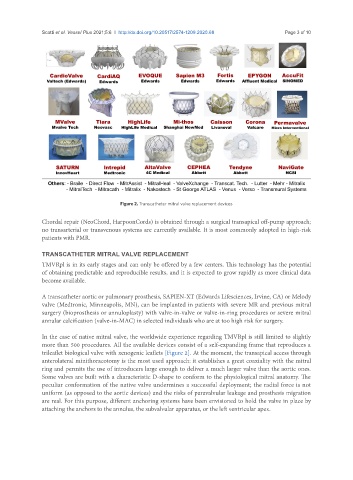
                                          Figure 2. Transcatheter mitral valve replacement devices


               Chordal repair (NeoChord, HarpoonCords) is obtained through a surgical transapical off-pump approach;
               no transarterial or transvenous systems are currently available. It is most commonly adopted in high-risk
               patients with PMR.


               TRANSCATHETER MITRAL VALVE REPLACEMENT
               TMVRpl is in its early stages and can only be offered by a few centers. This technology has the potential
               of obtaining predictable and reproducible results, and it is expected to grow rapidly as more clinical data
               become available.

               A transcatheter aortic or pulmonary prosthesis, SAPIEN-XT (Edwards Lifesciences, Irvine, CA) or Melody
               valve (Medtronic, Minneapolis, MN), can be implanted in patients with severe MR and previous mitral
               surgery (bioprosthesis or annuloplasty) with valve-in-valve or valve-in-ring procedures or severe mitral
               annular calcification (valve-in-MAC) in selected individuals who are at too high risk for surgery.


               In the case of native mitral valve, the worldwide experience regarding TMVRpl is still limited to slightly
               more than 500 procedures. All the available devices consist of a self-expanding frame that reproduces a
               trileaflet biological valve with xenogenic leaflets [Figure 2]. At the moment, the transapical access through
               anterolateral minithoracotomy is the most used approach: it establishes a great coaxiality with the mitral
               ring and permits the use of introducers large enough to deliver a much larger valve than the aortic ones.
               Some valves are built with a characteristic D-shape to conform to the physiological mitral anatomy. The
               peculiar conformation of the native valve undermines a successful deployment; the radial force is not
               uniform (as opposed to the aortic devices) and the risks of paravalvular leakage and prosthesis migration
               are real. For this purpose, different anchoring systems have been envisioned to hold the valve in place by
               attaching the anchors to the annulus, the subvalvular apparatus, or the left ventricular apex.

