


Page 89 - Read Online
P. 89
Walter et al. Vessel Plus 2021;5:27  https://dx.doi.org/10.20517/2574-1209.2020.102  Page 7 of 10


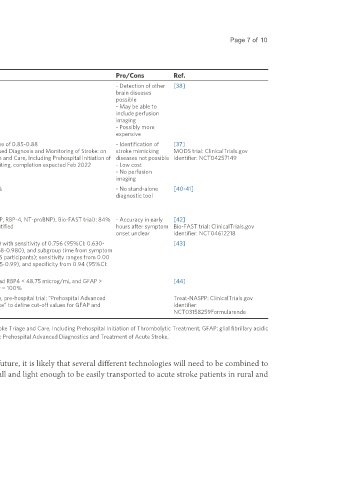
 Table 1. Novel stroke diagnostic tools for stroke diagnosis in the hyperacute phase

 Device  Mode of action/aim  Evidence   Pro/Cons            Ref.

 Lightweight CT scanner  - Non-thermionic nanotube   - No clinical data available  - Detection of other   [38]
 technology                             brain diseases
 - Differentiation of ischaemic vs.     possible
 haemorrhagic stroke vs. stroke         - May be able to
 mimic                                  include perfusion
                                        imaging
                                        - Possibly more
                                        expensive
 Microwave technique  - Detects dielectric contrast   - Early clinical studies: area under the curve of 0.85-0.88   - Identification of   [37]
 between tissues (in stroke:   - Phase II/III trial: “Mobile Microwave-based Diagnosis and Monitoring of Stroke: on   stroke mimicking   MODS trial: ClinicalTrials.gov
 contrast between blood and   the Road Towards Improved Stroke Triage and Care, Including Prehospital Initiation of  diseases not possible  Identifier: NCT04257149
 grey and white matter)   Thrombolytic Treatment,” currently recruiting, completion expected Feb 2022  - Low cost
 - Differentiation of ischaemic vs.     - No perfusion
 haemorrhagic stroke                    imaging
 Mobile transcranial   - Ultrasound detection of   - Sensitivity of 78% and specificity of 98%  - No stand-alone   [40-41]
 ultrasound including robotics  occlusion signal   diagnostic tool
 and artificial intelligence  - Differentiation of large vessel
 occlusion ischaemic stroke
 Blood biomarker: glial   - Blood point of care test   - First results STROKECheck device (GFAP, RBP-4, NT-proBNP), Bio-FAST trial): 84%  - Accuracy in early   [42]
 fibrillary acidic protein   - Differentiation of ischaemic vs.   of ischaemic stroke patients could be identified  hours after symptom   Bio-FAST trial: ClinicalTrials.gov
 (GFAP), retinol binding   haemorrhagic stroke (vs. stroke   onset unclear  Identifier: NCT04612218
 protein (RBP-4) and NT-  mimic)
 4  - GFAP: meta-analysis (1297 participants) with sensitivity of 0.756 (95%CI: 0.630-  [43]
 proBNP
 0.849), specificity of 0.945 (95%CI: 0.858-0.980), and subgroup time from symptom
 onset to GFAP measurement of 0-60 (235 participants); sensitivity ranges from 0.00
 (95%CI: 0.00-0.97) to 0.89 (95%CI: 0.65-0.99), and specificity from 0.94 (95%CI:
 0.83-0.99) to 1.00 (95%CI: 0.83-1.00)

 - GFAP + RBP-4: patients with ICH who had RBP4 < 48.75 microg/mL and GFAP >   [44]
 0.07 ng/mL: sensitivity = 32%, specificity = 100%
 - Open label non-randomised, prospective, pre-hospital trial: “Prehospital Advanced   Treat-NASPP: ClinicalTrials.gov
 Diagnostics and Treatment of Acute Stroke” to define cut-off values for GFAP and   Identifier:
 RBP4                                                       NCT03158259Formularende


 MODS: Mobile Microwave-based Diagnosis and Monitoring of Stroke: on the Road Towards Improved Stroke Triage and Care, Including Prehospital Initiation of Thrombolytic Treatment; GFAP: glial fibrillary acidic
 protein; RBP-4: retinol binding protein; NT-proBNP: N-terminal pro B-type natriuretic peptide; Treat-NASPP: Prehospital Advanced Diagnostics and Treatment of Acute Stroke.


 If alternative therapeutic devices shall find a place in acute stroke diagnosis in future, it is likely that several different technologies will need to be combined to

 allow a more precise diagnosis. However, all of these devices are likely to be small and light enough to be easily transported to acute stroke patients in rural and
 remote areas, enabling faster diagnosis and timely initiation of treatment.

