


Page 75 - Read Online
P. 75
Page 10 of 16                 Santos et al. Vessel Plus 2021;5:21  https://dx.doi.org/10.20517/2574-1209.2020.69


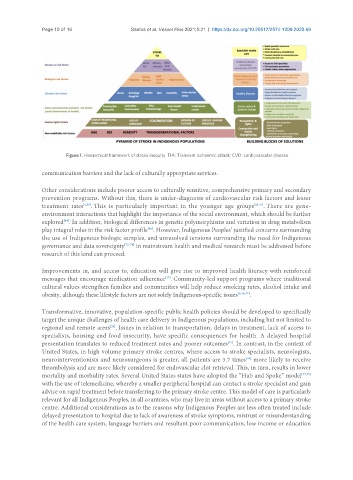
                       Figure 1. Hierarchical framework of stroke inequity. TIA: Transient ischaemic attack; CVD: cardiovascular disease.


               communication barriers and the lack of culturally appropriate services.

               Other considerations include poorer access to culturally sensitive, comprehensive primary and secondary
               prevention programs. Without this, there is under-diagnosis of cardiovascular risk factors and lesser
               treatment rates [5,38] . This is particularly important in the younger age groups [36,41] . There are gene-
               environment interactions that highlight the importance of the social environment, which should be further
                      [44]
               explored . In addition, biological differences in genetic polymorphisms and variation in drug metabolism
               play integral roles in the risk factor profile . However, Indigenous Peoples’ justified concerns surrounding
                                                   [46]
               the use of Indigenous biologic samples, and unresolved tensions surrounding the need for Indigenous
               governance and data sovereignty [72-74]  in mainstream health and medical research must be addressed before
               research of this kind can proceed.

               Improvements in, and access to, education will give rise to improved health literacy with reinforced
                                                         [47]
               messages that encourage medication adherence . Community-led support programs where traditional
               cultural values strengthen families and communities will help reduce smoking rates, alcohol intake and
               obesity, although these lifestyle factors are not solely Indigenous-specific issues [5,36,37] .


               Transformative, innovative, population-specific public health policies should be developed to specifically
               target the unique challenges of health care delivery in Indigenous populations, including but not limited to
               regional and remote areas . Issues in relation to transportation, delays in treatment, lack of access to
                                      [26]
               specialists, housing and food insecurity, have specific consequences for health. A delayed hospital
               presentation translates to reduced treatment rates and poorer outcomes . In contrast, in the context of
                                                                              [75]
               United States, in high volume primary stroke centres, where access to stroke specialists, neurologists,
                                                                                    [76]
               neurointerventionists and neurosurgeons is greater, all patients are 3.7 times  more likely to receive
               thrombolysis and are more likely considered for endovascular clot retrieval. This, in turn, results in lower
               mortality and morbidity rates. Several United States states have adopted the “Hub and Spoke” model [77,78]
               with the use of telemedicine, whereby a smaller peripheral hospital can contact a stroke specialist and gain
               advice on rapid treatment before transferring to the primary stroke centre. This model of care is particularly
               relevant for all Indigenous Peoples, in all countries, who may live in areas without access to a primary stroke
               centre. Additional considerations as to the reasons why Indigenous Peoples are less often treated include
               delayed presentation to hospital due to lack of awareness of stroke symptoms, mistrust or misunderstanding
               of the health care system, language barriers and resultant poor communication, low income or education

