


Page 63 - Read Online
P. 63
Page 4 of 9                                                           Kim et al. Soft Sci. 2026, 6, 26


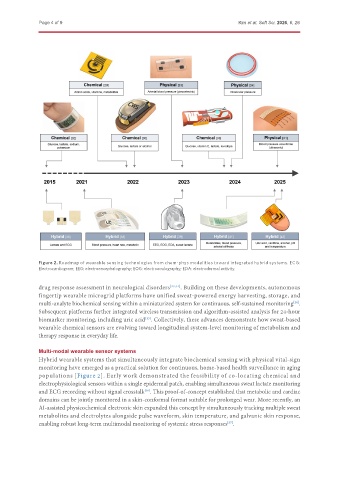
               Figure 2. Roadmap of wearable sensing technologies from chem-phys modalities toward integrated hybrid systems. ECG:
               Electrocardiogram; EEG: electroencephalography; EOG: electrooculography; EDA: electrodermal activity.


               drug response assessment in neurological disorders [33,34] . Building on these developments, autonomous
               fingertip wearable microgrid platforms have unified sweat-powered energy harvesting, storage, and
               multi-analyte biochemical sensing within a miniaturized system for continuous, self-sustained monitoring .
                                                                                                        [28]
               Subsequent platforms further integrated wireless transmission and algorithm-assisted analysis for 24-hour
               biomarker monitoring, including uric acid . Collectively, these advances demonstrate how sweat-based
                                                    [35]
               wearable chemical sensors are evolving toward longitudinal system-level monitoring of metabolism and
               therapy response in everyday life.


               Multi-modal wearable sensor systems
               Hybrid wearable systems that simultaneously integrate biochemical sensing with physical vital-sign
               monitoring have emerged as a practical solution for continuous, home-based health surveillance in aging
               populations [Figure 2]. Early work demonstrated the feasibility of co-locating chemical and
               electrophysiological sensors within a single epidermal patch, enabling simultaneous sweat lactate monitoring
               and ECG recording without signal crosstalk . This proof-of-concept established that metabolic and cardiac
                                                    [36]
               domains can be jointly monitored in a skin-conformal format suitable for prolonged wear. More recently, an
               AI-assisted physicochemical electronic skin expanded this concept by simultaneously tracking multiple sweat
               metabolites and electrolytes alongside pulse waveform, skin temperature, and galvanic skin response,
               enabling robust long-term multimodal monitoring of systemic stress responses .
                                                                                 [37]

