


Page 6 - Read Online
P. 6
Page 4 of 39                           Yang et al. Soft Sci. 2025, 5, 46  https://dx.doi.org/10.20517/ss.2025.44


                                                                         [45-56]
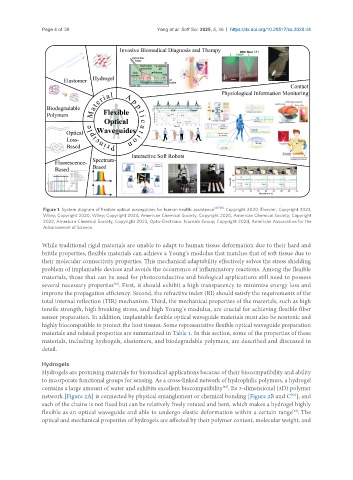
                Figure 1. System diagram of flexible optical waveguides for human health  assistance  . Copyright 2020, Elsevier; Copyright 2023,
                Wiley; Copyright 2020, Wiley; Copyright 2024, American Chemical Society; Copyright 2020, American Chemical Society; Copyright
                2022, American Chemical Society; Copyright 2023, Opto-Electronic Journals Group; Copyright 2024, American Association for the
                Advancement of Science.

               While traditional rigid materials are unable to adapt to human tissue deformation due to their hard and
               brittle properties, flexible materials can achieve a Young’s modulus that matches that of soft tissue due to
               their molecular connectivity properties. This mechanical adaptability effectively solves the stress shielding
               problem of implantable devices and avoids the occurrence of inflammatory reactions. Among the flexible
               materials, those that can be used for photoconductive and biological applications still need to possess
               several necessary properties . First, it should exhibit a high transparency to minimize energy loss and
                                       [60]
               improve the propagation efficiency. Second, the refractive index (RI) should satisfy the requirements of the
               total internal reflection (TIR) mechanism. Third, the mechanical properties of the materials, such as high
               tensile strength, high breaking stress, and high Young’s modulus, are crucial for achieving flexible fiber
               sensor preparation. In addition, implantable flexible optical waveguide materials must also be nontoxic and
               highly biocompatible to protect the host tissues. Some representative flexible optical waveguide preparation
               materials and related properties are summarized in Table 1. In this section, some of the properties of these
               materials, including hydrogels, elastomers, and biodegradable polymers, are described and discussed in
               detail.

               Hydrogels
               Hydrogels are promising materials for biomedical applications because of their biocompatibility and ability
               to incorporate functional groups for sensing. As a cross-linked network of hydrophilic polymers, a hydrogel
                                                                            [83]
               contains a large amount of water and exhibits excellent biocompatibility . Its 3-dimensional (3D) polymer
               network [Figure 2A] is connected by physical entanglement or chemical bonding [Figure 2B and C ], and
                                                                                                   [56]
               each of the chains is not fixed but can be relatively freely rotated and bent, which makes a hydrogel highly
               flexible as an optical waveguide and able to undergo elastic deformation within a certain range . The
                                                                                                    [84]
               optical and mechanical properties of hydrogels are affected by their polymer content, molecular weight, and

