


Page 6 - Read Online
P. 6
Page 4 of 27                              He et al. Soft Sci 2024;4:37  https://dx.doi.org/10.20517/ss.2024.32


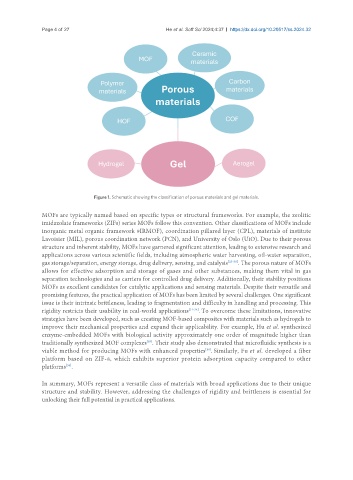
                                 Figure 1. Schematic showing the classification of porous materials and gel materials.

               MOFs are typically named based on specific types or structural frameworks. For example, the zeolitic
               imidazolate frameworks (ZIFs) series MOFs follow this convention. Other classifications of MOFs include
               inorganic metal organic framework 9IRMOF), coordination pillared layer (CPL), materials of institute
               Lavoisier (MIL), porous coordination network (PCN), and University of Oslo (UiO). Due to their porous
               structure and inherent stability, MOFs have garnered significant attention, leading to extensive research and
               applications across various scientific fields, including atmospheric water harvesting, oil-water separation,
               gas storage/separation, energy storage, drug delivery, sensing, and catalysis [25-30] . The porous nature of MOFs
               allows for effective adsorption and storage of gases and other substances, making them vital in gas
               separation technologies and as carriers for controlled drug delivery. Additionally, their stability positions
               MOFs as excellent candidates for catalytic applications and sensing materials. Despite their versatile and
               promising features, the practical application of MOFs has been limited by several challenges. One significant
               issue is their intrinsic brittleness, leading to fragmentation and difficulty in handling and processing. This
               rigidity restricts their usability in real-world applications [31-34] . To overcome these limitations, innovative
               strategies have been developed, such as creating MOF-based composites with materials such as hydrogels to
               improve their mechanical properties and expand their applicability. For example, Hu et al. synthesized
               enzyme-embedded MOFs with biological activity approximately one order of magnitude higher than
               traditionally synthesized MOF complexes . Their study also demonstrated that microfluidic synthesis is a
                                                  [35]
                                                                      [36]
               viable method for producing MOFs with enhanced properties . Similarly, Fu et al. developed a fiber
               platform based on ZIF-8, which exhibits superior protein adsorption capacity compared to other
                       [36]
               platforms .

               In summary, MOFs represent a versatile class of materials with broad applications due to their unique
               structure and stability. However, addressing the challenges of rigidity and brittleness is essential for
               unlocking their full potential in practical applications.

